Sichuan Pesto Noodles: A Spicy Dinner With a Twist
Last Updated on May 8, 2026 by juliarecipez
When the rhythm of daily life leaves you craving something vibrant and exhilarating, these Sichuan Pesto Noodles come to the rescue. Imagine the sharp, aromatic kick of Sichuan peppercorns dancing with the freshness of Thai basil, creating a delightful twist on traditional pesto. This dish is not just a treat for the taste buds; it s an unexpected adventure that can transform your weeknight dinner into a culinary celebration.
What truly excites me about this recipe is its simplicity. With minimal ingredients and just a few easy steps, you can whip up a meal that feels both gourmet and comforting. Perfect for those hectic evenings when takeout seems too easy, this plant-based delight is packed with nutty flavors and a hint of spice that will leave everyone at the table asking for seconds. Dive into this bowl of luscious goodness; your taste buds will thank you!
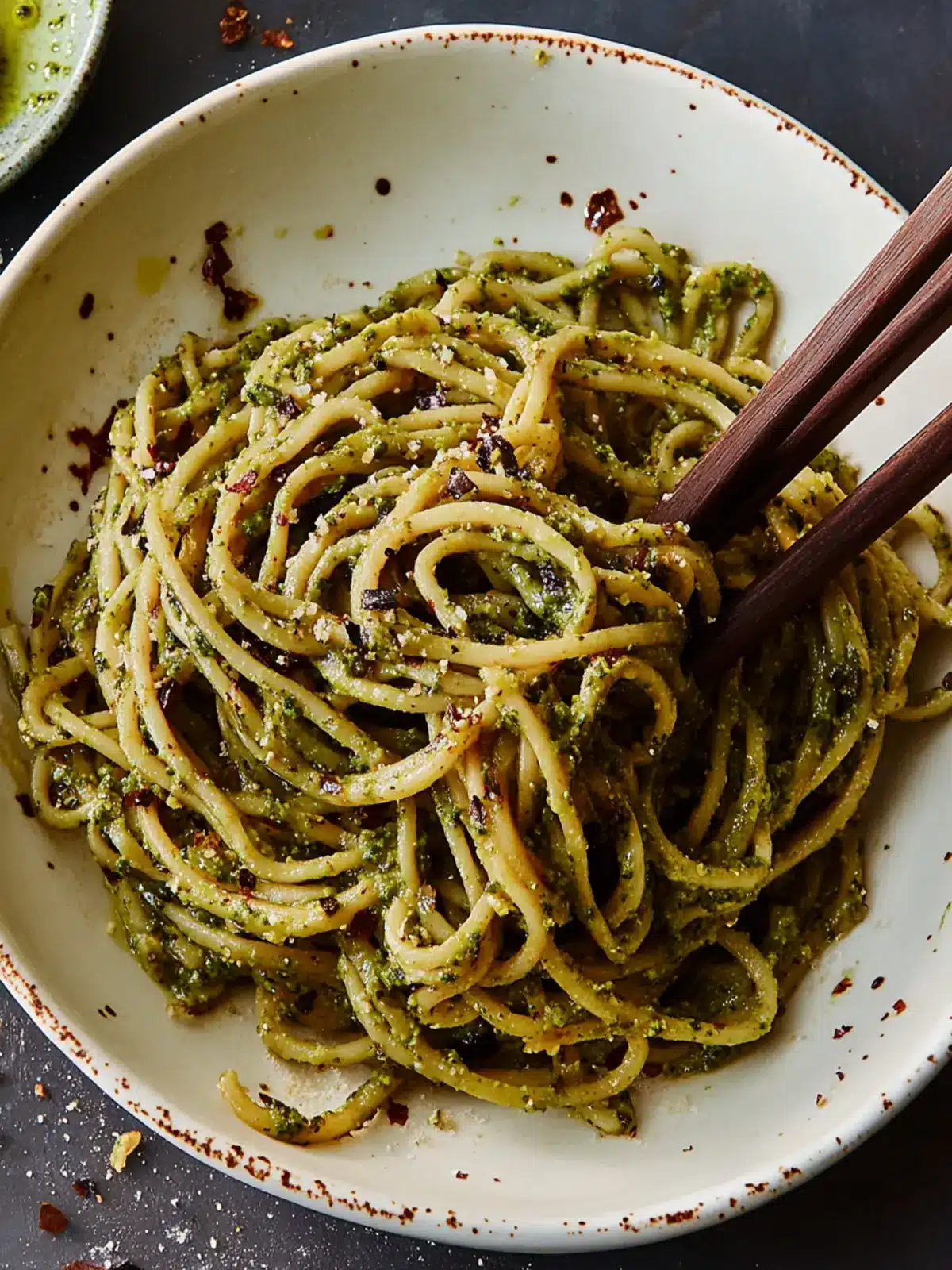
Why are Sichuan Pesto Noodles a must-try?
Simplicity and Speed: With just a handful of ingredients and a quick prep time, this dish is perfect for weeknight dinners.
Bold Flavor: The unique combination of Sichuan peppercorns and fresh Thai basil creates an unforgettable taste experience.
Versatile Ingredients: Easily swap out nuts or herbs to personalize your pasta.
Healthy and Nutritious: Packed with healthy fats, protein, and fiber, enjoy a guilt-free indulgence.
Crowd-Pleasing Delight: It’s a dish that everyone will love, impressing both family and friends alike.
Transform your dinner routine with these savory Sichuan Pesto Noodles and make every meal a feast!
Sichuan Pesto Noodles Ingredients
Ready to dive into a dish bursting with flavor? Here s what you need!
For the Pesto
- Unsalted Roasted Almonds Adds creaminess and nutty flavor; substitute with cashews or walnuts for a different taste.
- Sichuan Peppercorns Imparts a unique herbal spice with a gentle numbing heat; ensure they are ground finely for even distribution.
- Fresh Basil Provides freshness and aromatic qualities; Thai basil is recommended for its peppery flavor, otherwise, regular basil can be used.
- Garlic Enhances flavor depth; use fresh, roughly chopped garlic for a robust taste.
- White or Black Pepper Adds mild spiciness; use freshly cracked for better flavor.
- Reduced-Sodium Soy Sauce Provides umami depth while keeping the dish lighter in sodium.
- Sesame Oil Introduces a rich, toasty flavor; can be replaced with olive oil for a lighter version.
- Vegetable Oil Acts as a base for emulsifying the pesto; substitute with canola or sunflower oil if needed.
- Kosher Salt To taste; adjust based on dietary needs.
For the Noodles
- Chinese Egg Noodles (Fresh or Dried) The main carbohydrate source, providing texture; substitute with rice noodles or gluten-free noodles if necessary.
For Garnishing
- Toasted Sesame Seeds Adds texture and visual appeal; sprinkle generously for a delightful finish.
How to Make Sichuan Pesto Noodles
Prepare the Peppercorns: Grind Sichuan peppercorns into a fine powder using a mortar and pestle or spice grinder. This will help release their aromatic, spicy flavor throughout the dish.
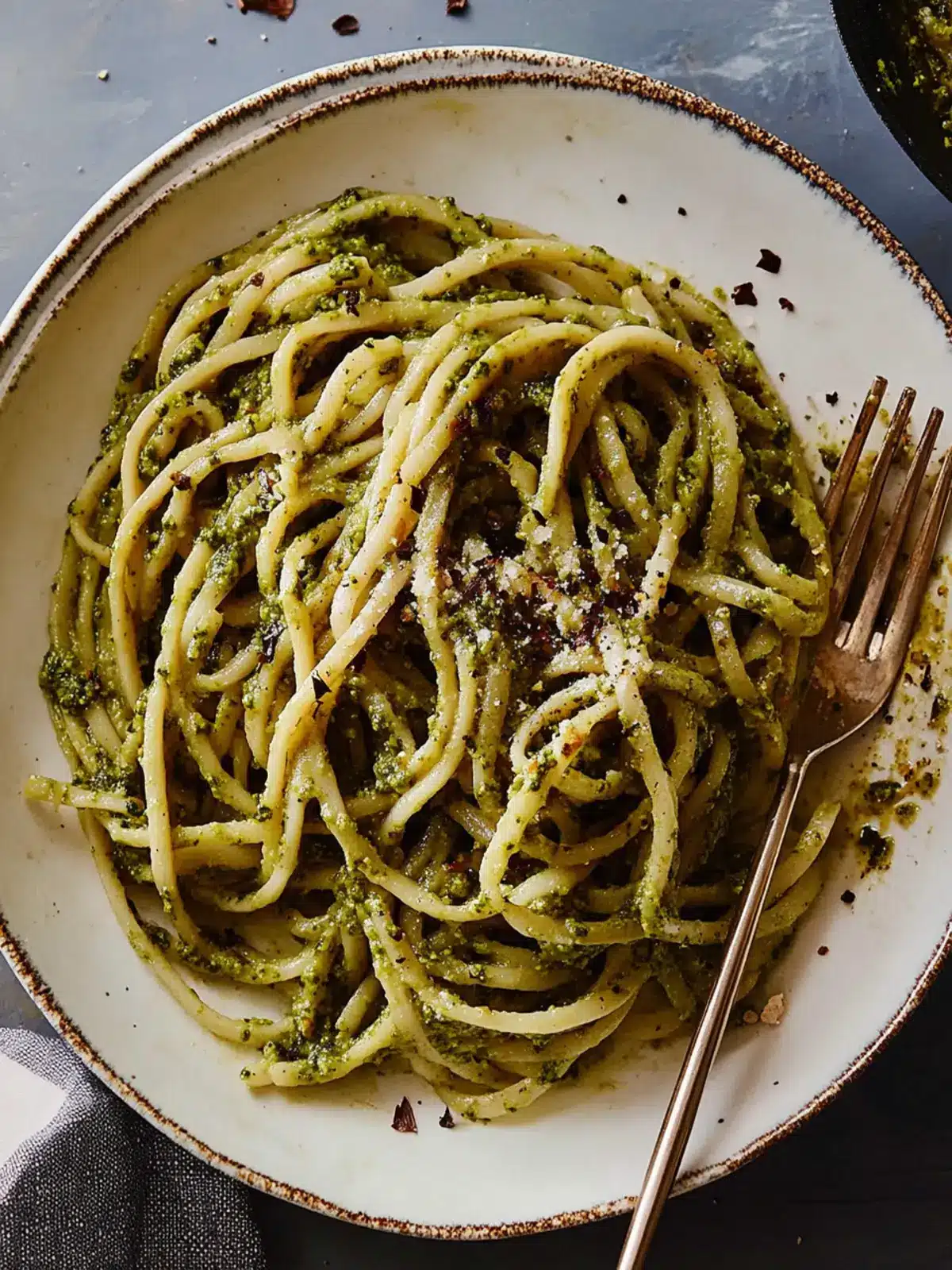
Make the Pesto: In a blender or food processor, combine the ground peppercorns, unsalted roasted almonds, fresh basil, garlic, and black or white pepper. Blend until smooth; the texture should be creamy yet spreadable.
Add Wet Ingredients: Slowly incorporate reduced-sodium soy sauce, sesame oil, and vegetable oil into the mixture until you achieve a creamy consistency, ensuring every ingredient is well-mixed and flavorful.
Cook the Noodles: Boil Chinese egg noodles according to package instructions until they reach an al dente texture. The noodles should be tender but still firm to the bite.
Combine: Toss the cooked noodles with the pesto sauce until they are well coated, ensuring every strand is enveloped in that vibrant flavor.
Serve: Garnish your plate with toasted sesame seeds for added crunch and visual appeal, and sprinkle with some extra Parmesan cheese if desired.
Optional: Drizzle a little sesame oil on top for an extra layer of flavor.
Exact quantities are listed in the recipe card below.
Expert Tips for Sichuan Pesto Noodles
Grinding Peppercorns: Ensure Sichuan peppercorns are ground finely to distribute their unique flavor evenly throughout the dish.
Adjust Garlic: Taste test the garlic and adjust according to your preference; too much can overpower the other flavors.
Watch the Spice: For a milder version, reduce the amount of Sichuan peppercorns or omit them, balancing the flavor with more almonds or Parmesan.
Noodle Texture: Cook Chinese egg noodles until just al dente; they will continue to soften when mixed with the pesto, ensuring the perfect bite.
Storing Pesto: Prepare extra pesto and store it in an airtight container in the fridge for up to 5 days or freeze for up to 6 months for quick meals later.
Make Ahead Options
These Sichuan Pesto Noodles are a fantastic option for meal prep enthusiasts! You can prepare the pesto sauce up to 3 days ahead of time; simply store it in an airtight container in the refrigerator to keep it fresh and vibrant. For best quality, drizzle a little extra oil on top to prevent browning. The noodles can also be cooked up to 24 hours in advance; just toss them with a bit of oil to avoid sticking. When you’re ready to enjoy your meal, reheat the noodles and mix them with the prepared pesto until well coated. In just moments, you’ll have a delicious dish ready to delight your taste buds!
What to Serve with Sichuan Pesto Noodles?
Looking to create a memorable meal that will tantalize your taste buds and complement the vibrant flavors of Sichuan Pesto Noodles?
- Crispy Spring Rolls: These bite-sized delights add a crunchy texture and savory flavors, perfect for a fun appetizer.
- Sesame Cucumber Salad: A refreshing contrast to the rich pesto, this salad brings a crispy, cool element to your meal. With its tangy dressing, it elevates the dining experience.
- Garlic Edamame: Steamed edamame tossed in garlic salt provides a protein-packed side, echoing the savory elements of the noodles without overwhelming them.
- Stir-Fried Bok Choy: Lightly sautéed bok choy serves as a deliciously tender side that introduces a bright, peppery flavor, bringing balance to your plate.
- Chili Oil Drizzle: A small spoonful on top can enhance the heat and add a splash of color. This personal touch takes the dish to another level!
- Mango Sticky Rice: End on a sweet note! This creamy, slightly sweet dessert contrasts wonderfully with the spicy noodles, creating a fantastic finish.
By combining these side dishes, you re building a feast that s sure to impress everyone at the table. Enjoy!
Storage Tips for Sichuan Pesto Noodles
Fridge: Keep leftover Sichuan Pesto Noodles in an airtight container for up to 3 days to maintain freshness and flavor.
Freezer: For longer storage, freeze the pesto separately from the noodles in an airtight container for up to 6 months.
Reheating: When you’re ready to enjoy leftovers, gently reheat the noodles in a pan over low heat with a splash of water or oil to prevent drying out.
Pesto Storage: If you have extra pesto, store it in a jar filled with a thin layer of oil on top to keep it fresh in the fridge for up to 5 days.
Sichuan Pesto Noodles Variations
Feel free to let your creativity shine as you explore these delightful twists for your Sichuan Pesto Noodles!
Nut-Free: Use sunflower seeds instead of almonds for a nut-free version, while maintaining that creamy texture.
Herb Swap: Try cilantro or parsley in place of basil for a fresh and fragrant twist that brightens the dish.
Extra Protein: Add cooked shrimp or chickpeas for a hearty protein boost, making your meal more filling and satisfying.
Heat Lovers: Toss in some chili oil or red pepper flakes to elevate the spice levels for those who crave a little more heat.
Savory Greens: Incorporate baby spinach or kale into the pesto for an extra boost of nutrients and a vibrant color.
Creamy Touch: Mix in a spoonful of coconut milk or cashew cream for a rich, luxurious finish that s perfect for creamy lovers.
Zesty Citrusy: A squeeze of lime or lemon juice not only brightens the flavors but also adds a refreshing zing that cuts through the richness.
Vegetable Medley: Stir in roasted or sautéed bell peppers, broccoli, or zucchini for added texture and flavors that complement the noodles perfectly.
Embrace these variations to create a meal that’s uniquely yours, infusing every bite with love and inspiration!
Sichuan Pesto Noodles Recipe FAQs
How do I choose the right Sichuan peppercorns?
Absolutely! When selecting Sichuan peppercorns, look for whole peppercorns that are bright red and have a fragrant aroma. They should be firm and free from dark spots. Fresh Sichuan peppercorns have a more pronounced flavor and aroma, which is essential for creating that signature numbing heat in your dish.
How should I store leftover Sichuan Pesto Noodles?
To keep your leftovers fresh, store them in an airtight container in the fridge where they will stay good for up to 3 days. If you need to keep them longer, I recommend freezing the pesto separately from the noodles; this can extend the life of your meal for up to 6 months!
Can I freeze the pesto? If so, how?
Yes, you can absolutely freeze the pesto! To freeze, spoon the pesto into an ice cube tray, filling each compartment, and place it in the freezer. Once frozen solid (about 4-6 hours), transfer the cubes to a freezer-safe bag. This allows you to thaw just what you need for quick meals later, keeping it fresh for about 6 months!
What if my noodles become mushy?
Very! If your noodles are mushy, it could be due to cooking them too long. Always check the package cooking time, and aim for just al dente; they will soften further when tossed with the pesto. For future reference, you can drench them in cold water right after cooking to stop further cooking and preserve their texture!
Can I adjust this recipe for dietary restrictions?
Absolutely! If you’re looking to make these Sichuan Pesto Noodles more accommodating, consider substituting the Chinese egg noodles for gluten-free noodles or rice noodles. For nut allergies, using sunflower seeds or pumpkin seeds can provide a similar texture and flavor in the pesto. Just remember to check the soy sauce for gluten or switch to Tamari for a gluten-free option.
Are Sichuan peppercorns safe for pets?
It’s best to keep Sichuan peppercorns away from pets. They are generally safe for humans but can cause gastrointestinal trouble in animals. If you’re sharing your meal with furry friends, consider making a separate, pet-friendly version without the peppercorns or other spicy ingredients!