
Savor Jambalaya: A Flavor-Packed Spiced Rice Dish Adventure
Last Updated on May 8, 2026 by juliarecipez
There’s something special about gathering with family and friends, sharing laughter and stories over a delicious meal. That s exactly what Jambalaya brings to the table a captivating one-pot dish that hails from the heart of Louisiana. Picture this: the tantalizing aroma of Andouille sausage sizzling, the vibrant colors of bell peppers and celery mingling with spices in a bubbling pot, and the sight of tender chicken and juicy prawns nestled in perfectly cooked spiced rice.
When I first tried making Jambalaya at home, I knew I had stumbled upon a culinary treasure. With its rich Creole and Cajun roots, this dish is not only a celebration of flavors but also a modern twist on comforting family traditions. Whether you’re looking to wow dinner guests or simply break free from the monotony of fast food, Jambalaya promises to elevate any meal into a festive occasion. Come join me on this flavorful journey let’s whip up a pot of Jambalaya that will linger in your memories long after the last bite!
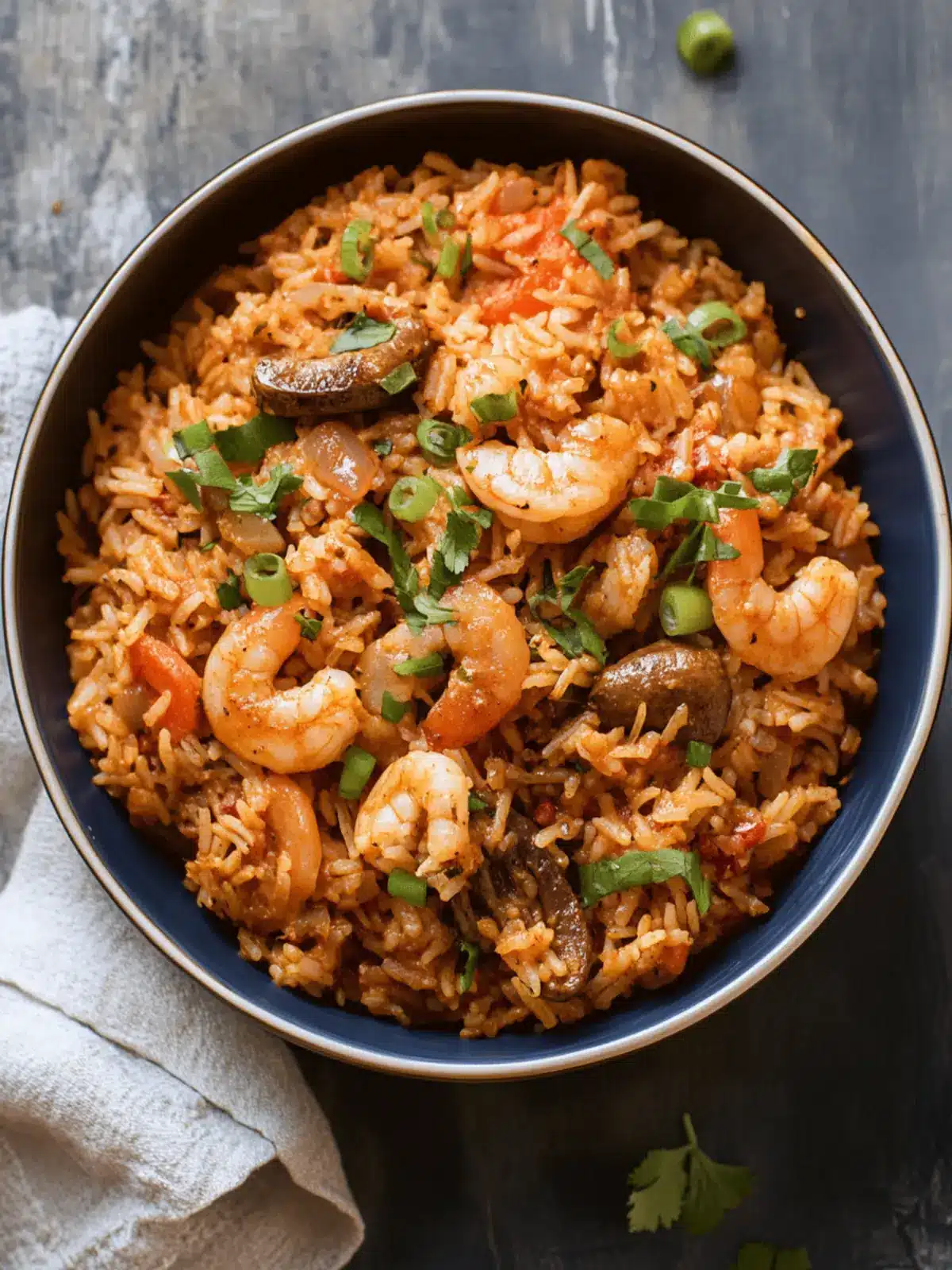
Why is Jambalaya a Must-Try Meal?
Flavor Explosion: Each bite of Jambalaya bursts with smoky sausage, tender chicken, and sweet prawns, enveloped in spiced rice that s simply irresistible.
One-Pot Wonder: Say goodbye to kitchen chaos! This dish requires minimal prep and clean-up, making weeknight dinners a breeze.
Versatile Dish: Customize it easily! Whether you prefer a rich Creole style or a spicier Cajun variation, you can adapt it to suit your taste.
Crowd Pleaser: Perfect for gatherings, Jambalaya invites everyone to share in a hearty meal, creating an atmosphere of warmth and togetherness.
Make-Ahead Friendly: Prepare it in advance, store, and reheat effortlessly for delicious meals in no time. For more tips, check out how to store your Jambalaya effectively!
Jambalaya Ingredients
For the Protein
Andouille Sausage Adds a smoky, rich flavor; substitute with smoked kielbasa if desired.
Chicken Thighs Provides a juicy and meaty base; can substitute with chicken breast for a leaner option.
Raw Prawns Offers a sweet, briny contrast; use fish or tofu for a seafood-free version.
For the Vegetables
Onion, Bell Pepper, Celery Forms the ‘holy trinity’ of Louisiana cooking; try leeks for a different onion flavor or swap colors of peppers as desired.
Garlic Enhances the dish’s aromatic quality; fresh is best, but garlic powder can work in a pinch.
Canned Chopped Tomatoes Adds moisture and a slight acidity; fresh tomatoes can be substituted with adjusted cooking time.
For the Base
Long Grain White Rice Absorbs the bold flavors; brown rice can be used but requires a longer cooking time.
Chicken Stock Provides a flavorful cooking base; vegetable stock can be used for a vegetarian option.
Tomato Paste Deepens the tomato flavor; can be omitted for a Cajun version without tomatoes.
For the Spices
Spices (Paprika, Thyme, Oregano, Cayenne) Essential for the dish’s flavor profile; adjust cayenne for preferred spice level.
Salt & Black Pepper Enhances overall flavor; using kosher salt yields a cleaner taste.
For Cooking
Vegetable Oil Used for sautéing; olive oil can be an alternative for a different flavor.
How to Make Jambalaya
Prep Ingredients: Begin by chopping the vegetables and proteins into bite-sized pieces. Rinse the rice under cold water until the water runs clear, ensuring your base is clean and ready to absorb all those delicious flavors.
Season Chicken: In a bowl, mix diced chicken thighs with spices, allowing it to marinate for about 15 minutes. This step is key to infusing the chicken with rich flavors.
Sear Sausage: Heat vegetable oil in a large pot over medium-high heat. Add the Andouille sausage and sear until browned. This should take about 4-5 minutes. Once done, remove the sausage and set it aside.
Brown Chicken: In the same pot, add the marinated chicken. Cook it until it’s golden brown on all sides, which should take another 5-7 minutes. Once browned, set the chicken aside with the sausage.
Cook Vegetables: Add the chopped onions, bell peppers, and celery to the pot, sautéing them until they soften (about 4-5 minutes). Stir in the minced garlic and canned chopped tomatoes, cooking for an additional 2 minutes until fragrant.
Add Tomato Paste & Seasonings: Stir in the tomato paste along with the spices, then bring back the sausage and chicken into the pot. Give everything a good mix so that the flavors meld beautifully.
Toast Rice: Add the rinsed rice into the pot, stirring it to coat the grains in the rich mixture. Toast the rice for 1-2 minutes, allowing it to absorb the flavors.
Add Liquids: Pour in the canned tomatoes and chicken stock, bringing the mixture to a boil. Once boiling, reduce the heat to low, cover the pot, and let it simmer for 20 minutes.
Add Prawns: After 20 minutes, scatter the raw prawns over the top of the rice, cover the pot again, and cook for an additional 5-7 minutes, until the prawns are pink and cooked through.
Rest & Fluff: Turn off the heat and allow the Jambalaya to rest for 5 minutes. Finally, fluff the rice gently with a fork, folding in the prawns for an even distribution of flavors.
Optional: Serve with lemon wedges and crusty bread to soak up the rich flavors.
Exact quantities are listed in the recipe card below.
Expert Tips for Jambalaya
Prep Ahead: Ensure all ingredients are prepped before starting to avoid last-minute chaos and maintain a smooth cooking flow. This preparation is key for a successful Jambalaya.
No Peeking: Resist the temptation to lift the lid while the Jambalaya simmers. This helps maintain the right steaming environment, crucial for perfectly cooked rice.
Taste as You Go: Adjust the seasoning during cooking, particularly the spices in your Jambalaya. Trust your palate to find that perfect flavor balance.
Rest Time Matters: After cooking, rest the dish for 5 minutes before serving. This allows the rice to settle and improves the overall texture.
Make It Your Own: Feel free to incorporate your favorite vegetables or proteins into the Jambalaya. Customization will make it uniquely yours while keeping the heart of the dish intact.
What to Serve with Jambalaya?
Elevate this vibrant dish by pairing it with delectable sides that complement its rich flavors and textures.
- Crusty Bread: Perfect for soaking up the juicy goodness, a warm loaf encourages a communal dining experience.
- Green Salad: A crisp, refreshing salad provides a delightful contrast, balancing the spiced richness of the Jambalaya.
- Cornbread: This Southern staple adds a touch of sweetness, enhancing the heartiness of the dish with its moist texture.
- Lemon Wedges: A squeeze of lemon brightens the flavors, cutting through the richness and adding a zesty twist.
- Pickle Relish: The tangy crunch of pickle relish introduces a fun texture contrast, making each bite even more exciting.
- Sweet Tea: A glass of cool sweet tea harmonizes the spices, creating a refreshing sip that s deeply rooted in Southern culture.
- Fried Green Tomatoes: Crispy and flavorful, they add an irresistible crunch that pairs beautifully with the soft, comforting rice.
- Roasted Vegetables: Seasonal veggies bring additional earthy flavors that blend seamlessly, providing visual appeal and nutrition.
- Pineapple Upside-Down Cake: For dessert, this classic cake adds a delightful sweetness to finish your meal on a high note.
Jambalaya Variations & Substitutions
Get creative with your Jambalaya! Let your tastes guide you as you explore exciting twists on this classic dish.
- Seafood Swap: Use scallops or crab instead of prawns for a different seafood flair. The sweetness of these options shines through beautifully in the spiced rice.
- Vegetarian Delight: Omit meat entirely and load up on extra veggies like zucchini, mushrooms, and bell peppers, using vegetable broth instead of chicken stock for a hearty vegetarian Jambalaya.
- Protein Flex: Switch out the Andouille sausage with turkey sausage or try firm tofu for a lighter yet satisfying alternative. Each option gives a unique flavor and texture.
- Spicy Kick: For heat lovers, add a splash of hot sauce or diced jalapeños while cooking. This way, you can tailor the spice level to your personal preference.
- Grain Variation: Swap long grain white rice for brown rice or quinoa. Just be sure to adjust cooking times; brown rice typically takes longer to become tender.
- Fresh Twist: Toss in some fresh spinach or kale at the end of cooking for a nutritious boost and a splash of vibrant color in your Jambalaya.
- Herb Infusion: Experiment with fresh herbs like parsley or cilantro stirred in just before serving. These give a fresh brightness that pairs perfectly with the hearty flavors.
- Citrus Zest: Add a squeeze of fresh lemon or lime juice before serving for a zesty contrast that lifts the dish to new bright and refreshing heights.
Make Ahead Options
These scrumptious Jambalaya are perfect for busy weeknights and meal prep enthusiasts! You can chop the vegetables and marinate the chicken up to 24 hours in advance, storing them in airtight containers in the refrigerator to keep them fresh. Additionally, you can fully prepare the dish and refrigerate it for up to 3 days before cooking. When you’re ready to serve, simply reheat the Jambalaya on the stove with a splash of chicken stock, adding the prawns during the last 5-7 minutes of cooking. This not only saves you time but also ensures your Jambalaya is just as delicious, bursting with fresh flavors and the comforting aroma of Louisiana cooking!
Storage Tips for Jambalaya
Fridge: Store leftover Jambalaya in an airtight container; it s good for up to 3 days. Reheat gently on the stovetop with a splash of chicken stock to revive the flavors.
Freezer: Place Jambalaya in freezer-safe containers or bags; it can be frozen for up to 2 months. Thaw in the fridge overnight before reheating.
Cooling: Allow Jambalaya to cool completely before storing to prevent condensation, which can lead to sogginess.
Reheating: For best results, reheat in a skillet over low heat, adding a little stock or water as needed for moisture. Enjoy your Jambalaya as if it s freshly made!
Jambalaya Recipe FAQs
How do I select ripe ingredients for Jambalaya?
Absolutely! When choosing your ingredients, look for firm, bright bell peppers and onions without dark spots or blemishes. For prawns, opt for ones that smell fresh and are slightly translucent. If using tomatoes, pick ones that are vibrant and fragrant, signaling ripeness. Fresh herbs should be bright in color, while dried herbs should be aromatic.
How should I store leftover Jambalaya?
Very simple! Jambalaya can be stored in an airtight container in the refrigerator for up to 3 days. Just make sure it cools completely before sealing to avoid excess moisture. If you want to keep it longer, transfer your cooled Jambalaya to a freezer-safe container. It can last for up to 2 months in the freezer!
Can I freeze my Jambalaya?
Of course! To freeze your Jambalaya, first, let it cool completely. Then, portion it into freezer-safe bags or containers. For easy meal prepping, you can freeze it in single servings. Just be sure to label with the date. When ready to enjoy, thaw it overnight in the fridge and then reheat gently on the stovetop with a splash of chicken stock or water to replenish moisture.
What if my Jambalaya turns out too dry?
No worries! If your Jambalaya turns out dry, just add a little chicken stock or water while reheating to bring it back to life. Stir it in gently and let it simmer for a few minutes to allow the rice to absorb the liquid. If this happens frequently, double-check your rice-to-liquid ratio next time, aiming for 1:2.
Are there any dietary considerations for Jambalaya?
Definitely! For those with seafood allergies, you can make a delicious seafood-free version by omitting prawns and using extra vegetables instead. If anyone in your family has a gluten intolerance, check the spices and broth you use for any hidden gluten. You can always substitute with gluten-free options to ensure everyone can savor your Jambalaya!
How can I customize my Jambalaya for different tastes?
The more, the merrier! If you love spice, kick it up a notch with extra cayenne or some hot sauce. You can also swap out proteins try using firm tofu for a vegetarian version or different types of sausage. Incorporate seasonal vegetables like zucchini or squash to make it your own. Just remember, the heart of the dish should remain intact while you experiment and have fun!