Savor Homemade Japanese Yuba (Tofu Skin) in Minutes
Last Updated on May 8, 2026 by juliarecipez
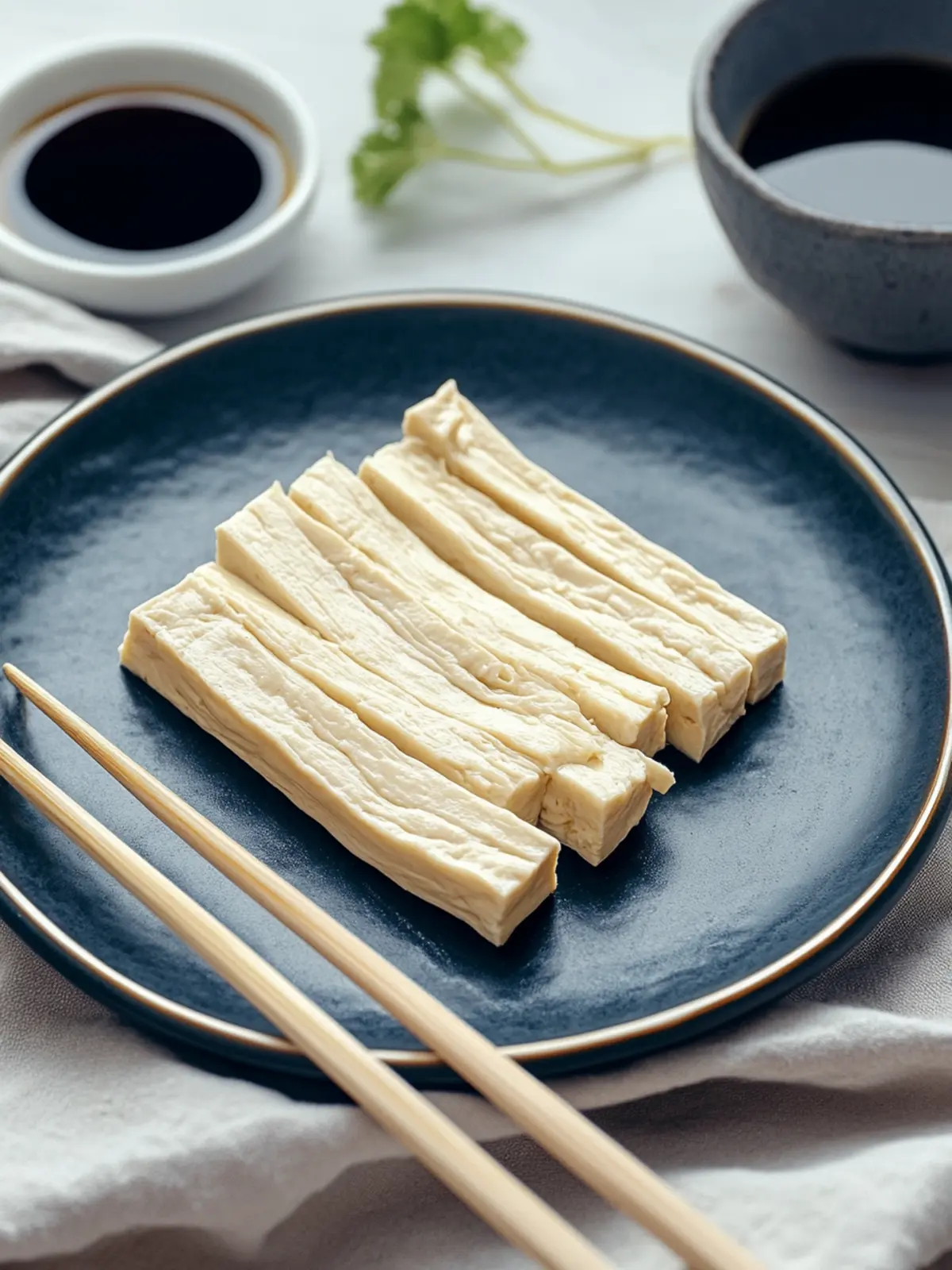
When I first stumbled upon yuba, or tofu skin, I was captivated by its delicate charm and versatility. This enchanting Japanese ingredient, made from the thin film that forms on the surface of heated soy milk, has a soft, silky texture that dances on your tongue. The moment I tasted it, with its subtle bean sweetness, I knew it would become a staple in my kitchen. Perfect for those days when I crave a quick and nutritious plant-based option, yuba offers an elegant alternative to standard fare.
Whether you’re preparing fresh yuba, tender and luxurious, or opting for the dried variety to rehydrate and incorporate into hearty stir-fries or warming soups, this recipe will guide you effortlessly through the creation of this delightful dish. Not only is yuba a vegan and gluten-free option, but it s also an impressive crowd-pleaser that adds a touch of sophistication to any meal. Join me as we dive into this Japanese delicacy and discover just how simple it is to make yuba at home!
Why love homemade Japanese Yuba (Tofu Skin)?
Ease of Preparation: Crafting yuba at home requires just a handful of ingredients and minimal cooking skills, making it accessible for everyone.
Sublime Texture: The end result boasts a silky smoothness that melts in your mouth, offering a luxurious experience.
Versatile Ingredient: Whether you enjoy it fresh or dried, yuba can be incorporated into salads, soups, or served as a stunning appetizer.
Crowd-Pleasing Dish: Impress your friends and family with this unique treat that s perfect for both casual home dinners and elegant gatherings.
Nutritional Powerhouse: Low in calories but high in protein, it’s a wholesome addition to your diet.
Eager to explore more about this delightful ingredient? Check out our recipe variations to elevate your culinary adventure!
Japanese Yuba (Tofu Skin) Ingredients
For the Yuba
- Soy Milk Use high-protein unsweetened soy milk (around 10% solids) as it’s the primary ingredient for producing yuba.
- Water Adjust consistency if needed; generally, no specific substitution is necessary.
For Serving
- Soy Sauce Optional, but this enhances umami flavor; use tamari for gluten-free needs.
- Wasabi or Grated Ginger Adds a spicy kick, or switch it up with other condiments like miso for extra flavor.
Get ready to immerse yourself in making this delightful Japanese yuba (tofu skin) that will elevate your plant-based meals!
How to Make Japanese Yuba (Tofu Skin)
Pour 1 liter of soy milk into a shallow stainless steel pan. Set it over very low heat, avoiding non-stick surfaces to prevent burning the milk.
Heat the soy milk until small bubbles start to form (approximately 80°C). Let it sit undisturbed for 5-7 minutes, allowing a thin film of yuba to form on the surface.
Test the firmness gently. Use chopsticks to lift the skin from one edge, letting any excess soy milk drip back into the pan for a moment.
Hang the lifted yuba for a few seconds to drain or carefully lay it on a parchment-lined tray to cool.
Repeat this process of filming until most of the soy milk is utilized, yielding around 6-8 delicate sheets of yuba.
Cool the sheets slightly and store them properly: keep them moist for soft yuba or air-dry for a firmer texture.
Serve your freshly made yuba with soy sauce and wasabi or ginger, or incorporate it into your favorite soups for an elegant touch.
Optional: For a refreshing twist, serve with ponzu sauce for a citrus flair.
Exact quantities are listed in the recipe card below.
Expert Tips for Japanese Yuba (Tofu Skin)
Temperature Control: Make sure the soy milk doesn’t boil; keep it at a low temperature to avoid burning and ensure a perfect yuba layer.
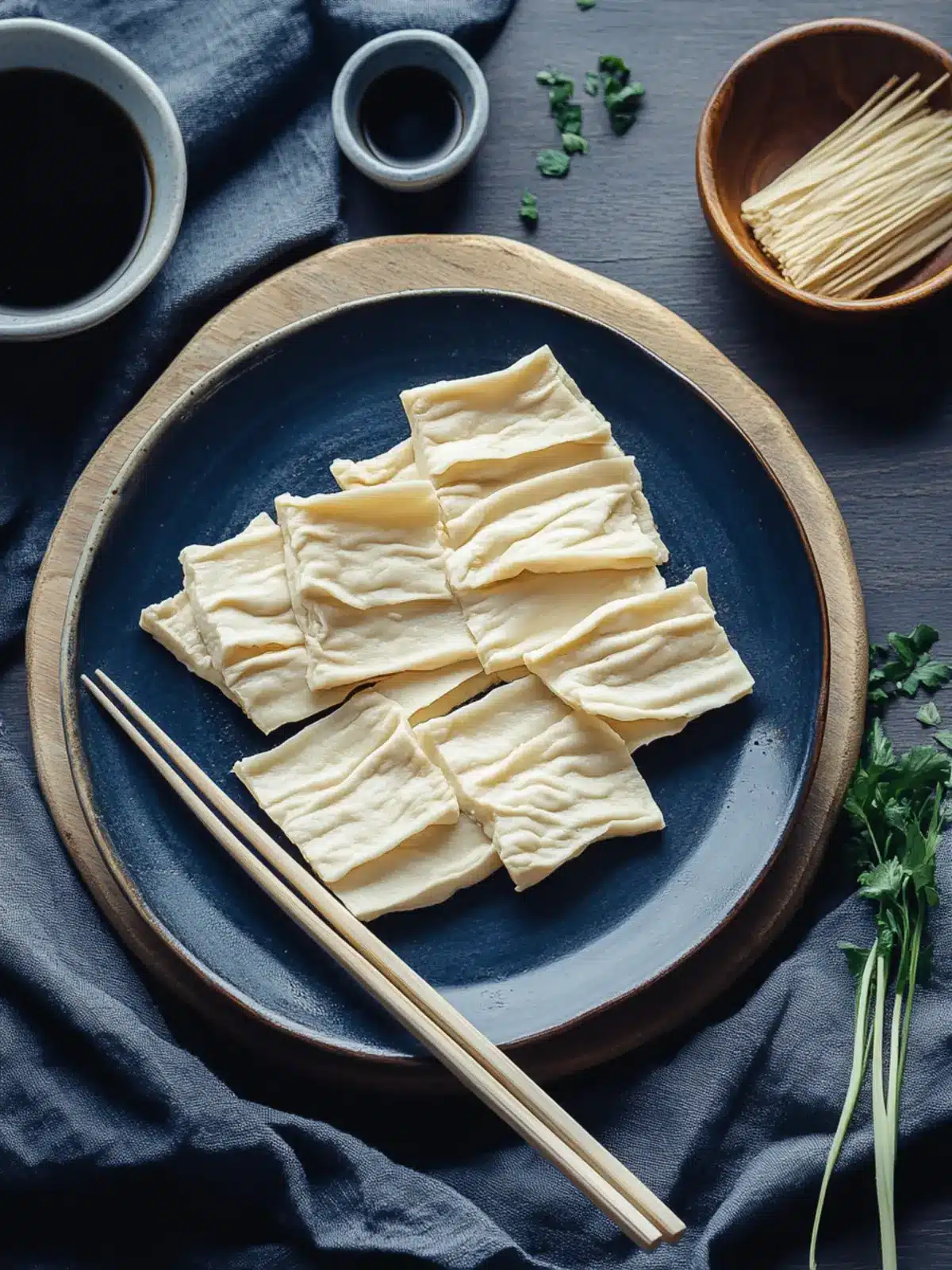
Gentle Handling: Lift the yuba skin slowly with chopsticks to prevent tearing. Patience is key in this delicate process!
Storage Advice: Fresh yuba should be consumed within 1-2 days; refrigerate and keep submerged in water for optimal freshness.
Avoid Freezing: Refrain from freezing fresh yuba, as ice crystals can adversely affect its lovely texture when thawed.
Dipping Ideas: Explore different sauces for serving try ponzu for a zesty contrast or miso for a richer flavor profile.
Enjoy crafting delicious dishes with your homemade Japanese yuba (tofu skin)!
Make Ahead Options
These Japanese Yuba (Tofu Skin) sheets are perfect for meal prep enthusiasts! You can prepare the yuba up to 24 hours in advance, allowing you to focus on other meal components later. To store, keep the freshly made yuba sheets moist by placing them in an airtight container submerged in water in the refrigerator. This method preserves their delicate texture and flavor until you’re ready to serve. When you’re set to enjoy your yuba, simply drain and pan-sear, or add them directly into soups for a delightful upgrade. With this prep step, you’ll save valuable time on busy weeknights while still savoring fresh, homemade yuba just as delicious as if made that day!
Japanese Yuba (Tofu Skin) Variations
Feel free to get creative and adapt this recipe to suit your tastes and dietary needs!
Citrus Twist: Add a splash of lemon or lime juice to your soy sauce for a refreshing zing.
Herbed Delight: Infuse the soy milk with fresh herbs like basil or cilantro before cooking for a fragrant touch.
Spicy Kick: Mix in chili flakes or a dash of hot sauce to your dipping sauce for a delightful kick.
Nutty Flavor: Drizzle with sesame oil before serving to enhance the umami profile and add richness.
Vegetable Wraps: Use fresh yuba to wrap an assortment of seasonal vegetables for a vibrant and healthy appetizer.
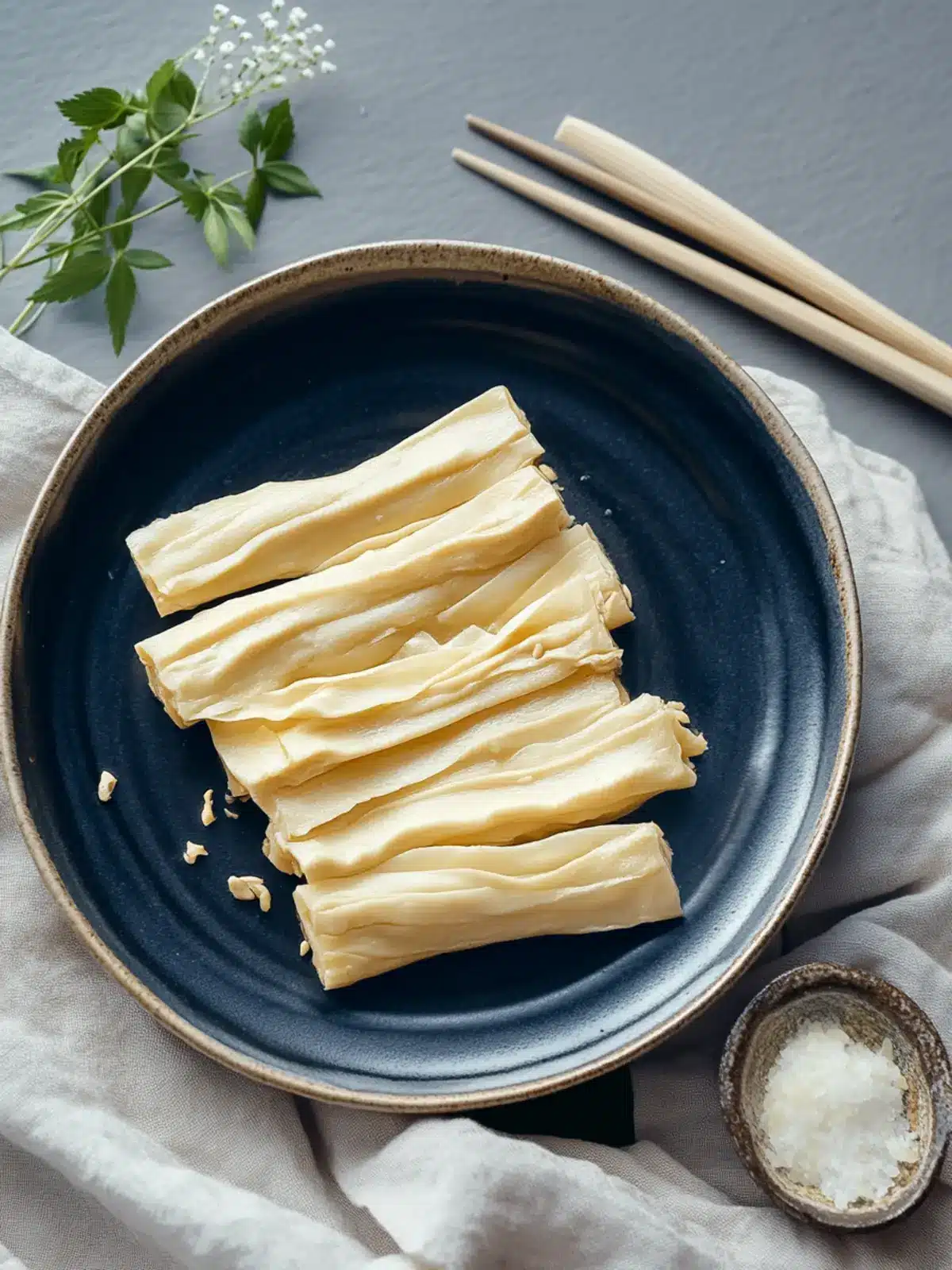
For a truly unique experience, consider using dried yuba: it requires rehydration but offers a satisfying chewiness perfect for stir-fries or salads.
- Creamy Addition: Turn your yuba into a creamy salad by adding coconut milk or tahini for a rich texture.
Experiment with these ideas and let your creativity shine as you enjoy this delightful Japanese delicacy!
What to Serve with Japanese Yuba (Tofu Skin)?
Delight in creating a complete meal around this delicate ingredient, enhancing its subtle flavors with enticing pairings.
Chilled Cucumber Salad: Refreshing and crunchy, this salad adds a crisp contrast to the silky yuba, making each bite delightful.
Savory Miso Soup: The umami richness of miso elevates yuba perfectly. Its warmth and complexity provide a beautiful balance to the lightness of the tofu skin.
Steamed Vegetables: Bright colored veggies like snap peas and carrots offer a vibrant and nutritious side, pairing beautifully with the unique texture of yuba.
Sushi Rolls: Wrap yuba around seasoned rice and fresh ingredients for a unique twist on sushi. The tofu skin adds a delightful richness to each bite.
Ginger-Infused Rice: Fluffy rice with a hint of ginger complements yuba’s subtle sweetness, creating a wholesome dish that s satisfying and aromatic.
Sesame Soy Dressing: Drizzle this over salads or yuba to enhance flavors with nutty and savory undertones, enriching the overall experience.
Matcha Green Tea: Start your meal with this calming beverage to elevate the experience, its earthy tones blending beautifully with the subtlety of yuba.
Coconut Milk Dessert: Finish with a light, refreshing dessert. The creamy sweetness beautifully contrasts with the savory notes of yuba, leaving your guests satisfied.
How to Store and Freeze Japanese Yuba (Tofu Skin)
Fridge: Store fresh yuba submerged in water in an airtight container for up to 1-2 days. Change the water daily to maintain its freshness.
Freezer: While it’s best not to freeze fresh yuba, dried yuba can be stored in an airtight container for several months. Rehydrate before use.
Reheating: If needed, gently steam or warm the yuba in a microwave to preserve its delicate texture before serving or incorporating into dishes.
Japanese Yuba (Tofu Skin) Recipe FAQs
What type of soy milk should I use for making yuba?
Absolutely! It’s best to use high-protein unsweetened soy milk that has around 10% solids. This will help ensure you get a good yield of yuba with the right texture and flavor. Avoid sweetened varieties, as they can alter the taste of your yuba.
How should I store fresh yuba after making it?
Fresh yuba should be kept submerged in water within an airtight container in the refrigerator. This method keeps it fresh for 1-2 days. Make sure to change the water daily to prevent any spoilage. When stored properly, it will retain its delicate texture and taste.
Can I freeze yuba, and if so, how?
While it’s best not to freeze fresh yuba, you can freeze dried yuba! To do this, place the dried yuba in an airtight container or resealable bag and store it in the freezer for up to 3 months. When you re ready to use it, simply soak it in warm water for 20-30 minutes to rehydrate.
What are some common issues when making yuba?
Very! One common issue is not heating the soy milk to the right temperature; if it boils, you’ll risk burning and a poor yield. Another problem could be tearing the yuba when lifting it use chopsticks gently to lift the edges and practice patience. Lastly, if the soy milk isn’t thick enough, try using a higher protein content soy milk next time for better results.
Are there any dietary considerations with yuba?
Yes! Yuba is naturally vegan and gluten-free, making it a fantastic option for those with dietary restrictions. However, if you or your guests have allergies to soy, it s important to steer clear of yuba. Always check the labels on soy milk and other ingredients to ensure there are no hidden allergens.
Can I use different sauces with yuba?
Absolutely! While soy sauce is a classic pairing, you can get creative with flavors. Ponzu sauce adds a delightful citrus finish, while spicy miso gives a richer taste. Feel free to experiment and find a combination that you love!