
Coconut Curry Chicken Meatballs That’ll Spice Up Dinner!
Last Updated on May 8, 2026 by juliarecipez
Picture this: the tantalizing aroma of spices wafting through your kitchen as juicy meatballs sizzle to perfection. That s exactly what happens when you whip up these Thai-Style Coconut Curry Chicken Meatballs! This recipe is a delightful blend of bold flavors, where the warmth of ginger and garlic meets the creaminess of coconut milk. It’s the kind of meal that transforms an ordinary weeknight into an extraordinary dining experience without the stress of complicated cooking.
I discovered this treasure while on a quest for something new to enliven my dinner rotation goodbye, fast food! With just 15 minutes of prep, you ll get to enjoy a high-protein dish that s not only comforting but also bursting with vibrant tastes. So, whether you re feeding your family or impressing guests, these meatballs will satisfy cravings and evoke that cozy feeling we all seek at dinner time. Grab your apron and let s dive into this flavor-packed journey together!

Why are Coconut Curry Chicken Meatballs a must-try?
Simplicity combined with flavor: Whipping up these meatballs takes just 15 minutes of prep time!
Bold, exotic tastes are achieved with a few easily accessible ingredients, making it a great choice for adventurous eaters.
High-protein goodness: Packed with ground chicken and loaded with nutritious spinach, these meatballs fuel your day.
Comfort food redefined: The creamy coconut sauce envelops the meatballs, elevating them to a satisfying, cozy dish perfect for any occasion.
Crowd-pleaser appeal: Serve these to family or guests, and watch as everyone savors each delicious bite! If you’re exploring more creative dinner ideas, consider checking out our easy dinner recipes.
Coconut Curry Chicken Meatballs Ingredients
For the Meatballs
Large Egg Binds the meat mixture together; use a flaxseed egg for a vegan alternative.
Ground Chicken Main protein source; can substitute with ground turkey or tofu for a lighter option.
Chopped Fresh Basil Adds freshness and aroma; substitute with cilantro if desired.
Scallions Provides a mild onion flavor and crunch; green onions can be used for similar taste.
Red Serrano Chile Adds heat and color; jalapeño can be a milder substitute.
Garlic Enhances flavor; use garlic powder if fresh is not available.
Ginger Contributes warmth and spice; ground ginger can be used in a pinch.
Red Curry Paste Provides depth and heat; can substitute with yellow curry paste for a milder flavor.
Fish Sauce Adds umami; soy sauce is a great substitute for vegetarian versions.
For the Sauce
Neutral Oil For cooking; olive oil or coconut oil works well.
Medium Carrot Adds sweetness and texture; other veggies like zucchini can be grated as a substitute.
Ground Coriander Provides warm, citrusy notes; cumin can be used if unavailable.
Low-Sodium Chicken Broth Adds moisture and flavor; vegetable broth works for vegetarian versions.
Coconut Milk Creates a creamy sauce; other non-dairy milks can be used, but texture may change.
Honey Balances the spiciness; maple syrup can substitute for a vegan version.
Frozen Spinach Adds nutrition and bulk; fresh spinach can be used if wilted first.
Fresh Lime Juice Brightens the dish; bottled lime juice is an alternative.
For Serving
Cooked White Rice Serves as a base; quinoa or cauliflower rice can be lower-carb alternatives.
Prepare to indulge in these Coconut Curry Chicken Meatballs that will surely spice up your weeknight dinners!
How to Make Coconut Curry Chicken Meatballs
Preheat the oven to 400°F (200°C). This ensures that your meatballs will cook evenly and develop a lovely golden exterior.
Mix ground chicken with the egg, basil, scallions, serrano chile, garlic, ginger, red curry paste, fish sauce, soy sauce, and salt. Combine everything until it’s smooth but be careful not to over-mix.
Form the mixture into uniform meatballs, roughly the size of a golf ball, and place them on a lined baking sheet. This helps create a perfectly crispy crust.
Bake the meatballs in the preheated oven for 20-25 minutes, until they’re fully cooked and golden brown. A meat thermometer should read 165°F (74°C).
Heat neutral oil in a saucepan over medium heat, then sauté the grated carrot for about 3-4 minutes. It should become tender and fragrant at this point.
Add the remaining spices, low-sodium chicken broth, and coconut milk to the saucepan. Bring the mixture to a gentle simmer, allowing the flavors to meld.
Stir in the spinach, honey, and lime juice, cooking until the spinach has wilted. This step adds color and nutrition to your sauce.
Combine the baked meatballs with the sauce, letting them simmer together for a few more minutes. This helps all those beautiful flavors to come together.
Serve the meatballs over cooked white rice, garnished with remaining scallions and basil for a fresh finish. Enjoy the bright, rich flavors!
Optional: For an extra touch, sprinkle some crushed peanuts on top before serving for added crunch.
Exact quantities are listed in the recipe card below.
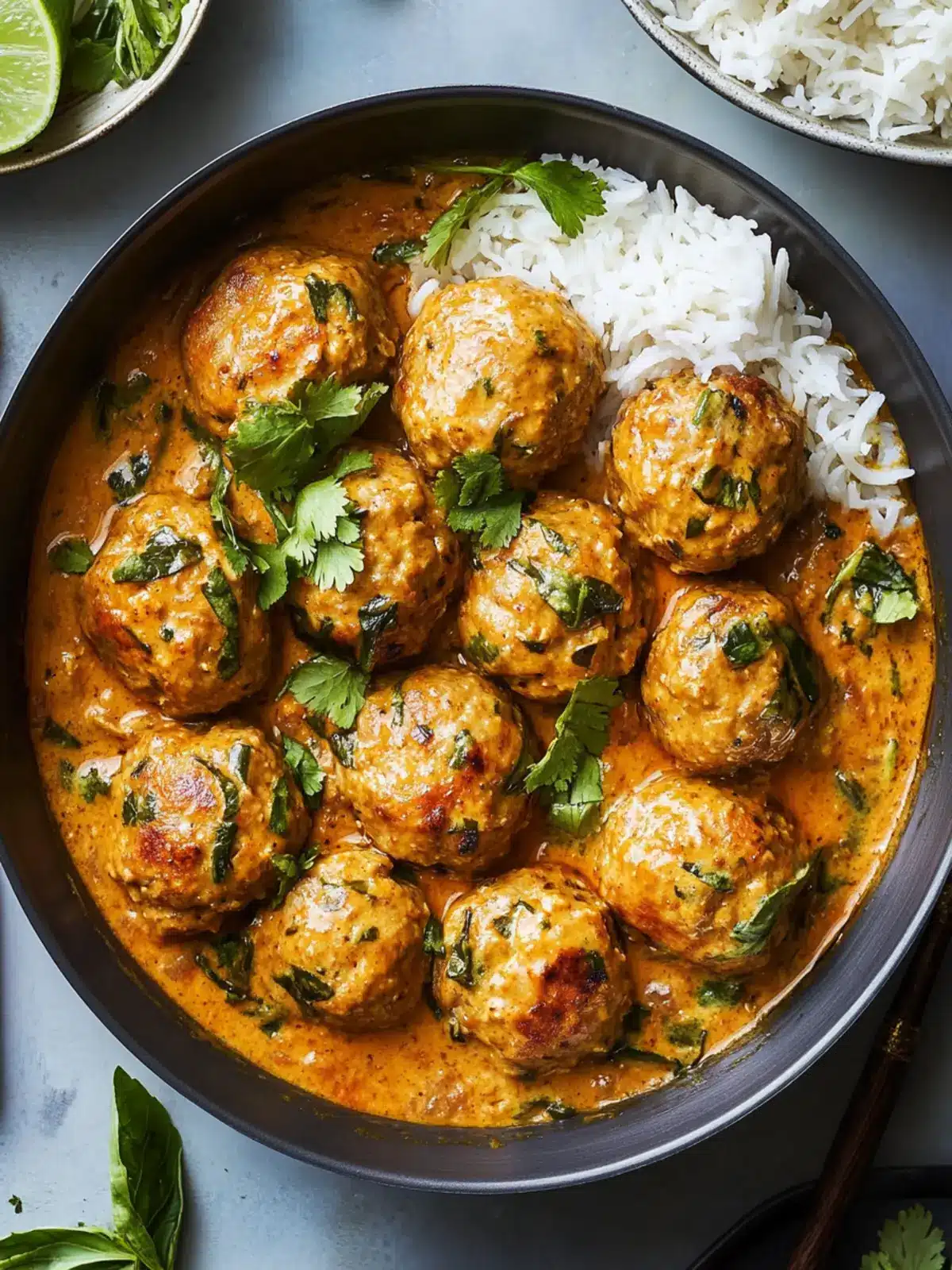
Coconut Curry Chicken Meatballs Variations & Substitutions
Feel free to play around with these ideas to make this dish uniquely yours and suit your tastes!
Plant-Based Option: Swap ground chicken for chickpeas or your favorite plant-based meat for a delicious vegetarian twist.
This alternative retains the hearty texture and makes the dish suitable for everyone at your table.No-Peanut Noodles: Try serving these meatballs over zucchini noodles instead of rice for a low-carb option without sacrificing flavor.
The fresh, crunchy aspect of the zucchini complements the creamy coconut sauce beautifully.Extra Veggie Boost: Incorporate additional vegetables like finely diced bell peppers or snap peas for added nutrition and crunch.
These vibrant colors and textures will elevate both the look and taste of your meal.Heat Adjustment: Lower the spiciness by using less red curry paste and mixing in sweet chili sauce for a milder but flavorful kick.
You can gradually increase the spice level until it matches your comfort zone.Coconut Yogurt: Mix in a dollop of coconut yogurt when serving for a creamy and tangy flair, enhancing that coconut taste.
It s a delightful way to freshen up the dish at serving time, perfect for warmer evenings.Greener Tint: Add fresh spinach or kale into the sauce for added greens and nutrients, providing a beautiful pop of color.
This will also infuse the sauce with more flavor while keeping it healthy!Alternative Proteins: Use ground turkey or lean beef instead of ground chicken if you re looking for different flavor profiles or healthier options.
These swaps bring their unique characteristics, creating a new experience each time you make them.Sweet vs. Savory: Replace honey with agave syrup or maple syrup for a vegan-friendly sweetness complementing the spice.
It’s a simple swap that keeps the essence of the dish while adhering to your dietary preferences.
Storage Tips for Coconut Curry Chicken Meatballs
Fridge: Store leftovers in an airtight container for up to 3-4 days. Allow the meatballs to cool before sealing to maintain freshness.
Freezer: Freeze meatballs individually on a baking sheet before transferring to a freezer-safe container. They can be stored for up to 3 months.
Reheating: To reheat, thaw in the fridge overnight, then warm in a saucepan over low heat until heated through, adding a splash of chicken broth if needed.
Airtight Storage: Ensure the container is sealed tightly to prevent freezer burn and loss of flavor in your Coconut Curry Chicken Meatballs.
Expert Tips for Coconut Curry Chicken Meatballs
Don t Over-mix: Make sure to mix the ground chicken just until combined to keep your meatballs tender and avoid a dense texture.
Adjust the Heat: Personalize your spice level by starting with a small amount of red curry paste, then gradually add more to achieve your desired level of heat.
Check Temperature: Use a meat thermometer to ensure your meatballs reach an internal temperature of 165°F (74°C) for safety and perfect doneness.
Customize Vegetables: Feel free to experiment by adding other veggies like bell peppers or snap peas for extra nutrition and texture in the sauce.
Use Fresh Herbs: For the brightest flavor, use fresh basil instead of dried, and add it just before serving to retain its aroma and freshness.
Storage Tips: Keep leftovers in an airtight container in the fridge for up to 4 days. Reheat gently to maintain the creamy texture of the coconut sauce.
Make Ahead Options
These Coconut Curry Chicken Meatballs are fantastic for busy home cooks looking to save time during weeknight dinners! You can mix the meatball ingredients and form the meatballs up to 24 hours in advance; simply cover them tightly and refrigerate. Additionally, the coconut curry sauce can be prepared up to 3 days ahead and stored in an airtight container, which helps develop those rich flavors. When you re ready to enjoy, just bake the meatballs and warm the sauce on the stove; combine them for a delicious meal that tastes just as fresh! This way, you have a comforting, high-protein dinner waiting for you with minimal fuss.
What to Serve with Coconut Curry Chicken Meatballs?
Transform your meal into a delightful feast with these perfect accompaniments that balance flavors and textures beautifully.
Steamed White Rice: This classic pairing absorbs the creamy coconut sauce, ensuring you savor every last bite. It’s the ideal backdrop for the bold flavors of the meatballs.
Crispy Naan: Perfect for scooping up the sauce, naan adds a robust, chewy texture that complements the soft meatballs, enhancing the overall dining experience.
Sauteed Spinach and Garlic: Lightly sautéed with a hint of garlic, this fresh side brings a vibrant green color and complements the richness of the meatballs.
Quick Pickled Vegetables: A zesty side that adds acidity and brightness, cutting through the creaminess of the coconut sauce, stimulating your palate with every bite.
Cucumber Salad: Cool and refreshing, a cucumber salad dressed with lime and herbs provides a crunchy contrast to the tender meatballs an excellent way to add freshness to your dinner!
Mango Chutney: A touch of sweetness from this tropical condiment beautifully offsets the heat of the curry, creating a balancing act of flavors in your mouth.
Thai Basil Sprigs: Garnishing with fresh Thai basil not only elevates presentation but also infuses each bite with aromatic notes that tie back to your main dish, enhancing the whole meal.
Chilled Coconut Water: To refresh your palate, sip on some chilled coconut water, which pairs wonderfully with the spices, offering a light and hydrating contrast.
Chocolate Coconut Cake: End your meal on a sweet note with a rich dessert. This cake echoes the coconut theme, bringing a harmonious close to your flavorful journey.

Coconut Curry Chicken Meatballs Recipe FAQs
What type of ground chicken should I use?
Absolutely, using lean ground chicken is ideal for these meatballs. You can also use ground turkey or even plant-based ground meat if you’re looking for a healthier or vegetarian option. Just make sure to check the quality and freshness to ensure your meatballs are juicy and flavorful!
How should I store leftovers?
Leftovers can be stored in an airtight container in the refrigerator for up to 3-4 days. Before sealing, allow the meatballs to cool completely; this helps maintain their moisture and freshness. When ready to enjoy, simply reheat them gently on the stovetop.
Can I freeze Coconut Curry Chicken Meatballs?
Yes! To freeze, first, place the cooked meatballs on a baking sheet in a single layer and freeze until solid, about 1-2 hours. Then transfer them to a freezer-safe container or Ziploc bag, where they can last for up to 3 months. When you’re ready to eat, thaw them in the fridge overnight and reheat gently on the stovetop with a bit of broth or water.
What should I do if my meatballs are too dry?
If you find your meatballs are coming out dry, a couple of adjustments can help. First, ensure that you’re not over-mixing the meat mixture, as this can lead to a denser texture. Adding a little extra moist ingredient like a splash of coconut milk or an additional egg can also help keep them tender.
Are there any allergy considerations for this recipe?
That s a great question! This recipe contains common allergens such as egg and fish sauce. For vegan or vegetarian diets, you can substitute a flaxseed egg for the egg and replace fish sauce with soy sauce. Always check the labels for any hidden allergens, especially in pre-packaged ingredients like curry paste and sauces.
What s a good alternative if I don t have red curry paste?
If red curry paste isn t available, you can easily switch to yellow curry paste for a milder flavor. Another option is to mix spices such as cumin, turmeric, and a hint of chili powder to create a homemade version. Start with smaller amounts to adjust to your taste, as you can always add more!