
Spicy Korean Tteokbokki: Irresistible Chewy Rice Cakes Delight
Last Updated on May 8, 2026 by juliarecipez
There’s something undeniably comforting about the spicy-sweet aroma that fills the kitchen when making Korean Tteokbokki. This iconic street food is a delightful blend of chewy rice cakes bathed in a bold gochujang sauce that dances on your palate, balancing heat with just the right amount of sweetness. Whether it’s a chilly evening or just a craving for something truly satisfying, Tteokbokki not only delivers warmth but also brings friends and family together.
I first encountered this dish at a bustling night market, where the vibrant red sauce and eager vendors created a lively atmosphere. Since then, it’s become a staple in my home. Best of all, Tteokbokki is quick to whip up, making it perfect for a cozy night in or a spontaneous gathering. Join me as we dive into this irresistibly savory recipe that will surely become your go-to comfort food!
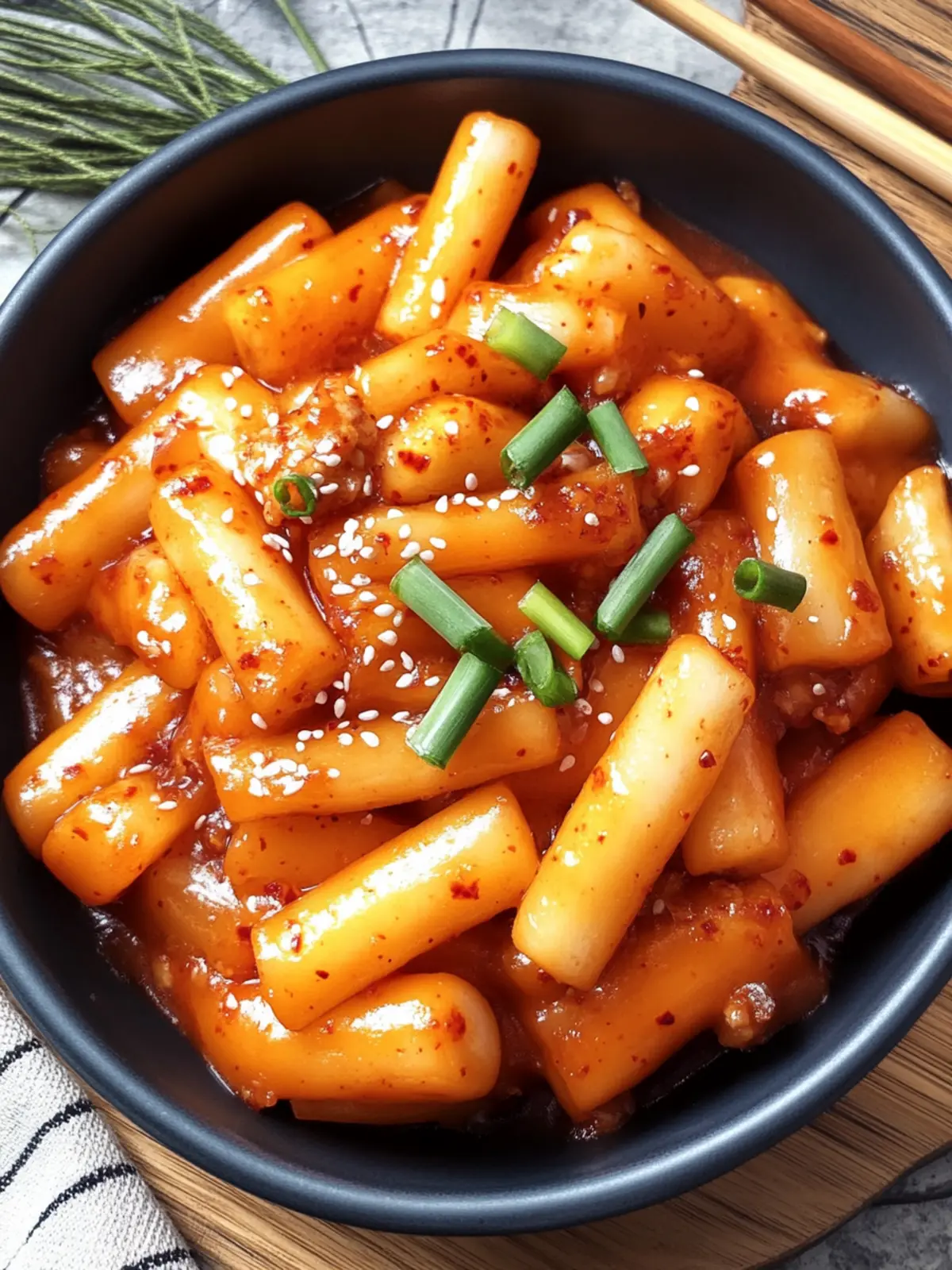
Why is Korean Tteokbokki a Must-Try Dish?
Comforting Experience: This dish combines the warmth of chewy rice cakes with a rich sauce that hugs each bite.
Explosive Flavor: The gochujang provides an unforgettable spicy-sweet kick that keeps you coming back for more.
Quick to Prepare: With minimal prep time, you can enjoy an amazing homemade meal in under 30 minutes.
Endless Variations: Customize with veggies, proteins, or spice levels to suit any palate.
Crowd Pleaser: Perfect for sharing, this dish sparks joy at gatherings, making you the star of any dinner party!
For a twist, try pairing it with homemade kimchi for an authentic experience!
Korean Tteokbokki Ingredients
Get ready to experience the magic of homemade Korean Tteokbokki with these must-have ingredients!
For the Tteokbokki
- Korean Rice Cakes (Tteok) These chewy delights are essential for authenticity; soak them well before cooking.
- Fish Cakes Provides a protein boost and texture; a vegetarian version can swap this for tofu.
- Onion Brings sweetness and depth; opt for a yellow onion for a richer flavor.
- Carrot Adds a pop of color and sweetness; feel free to leave it out if desired.
- Green Onions Perfect for garnishing and enhancing flavor; fresh chives make a great substitute.
- Hard-Boiled Eggs Optional, adding protein and richness; simply leave them out for a vegan dish.
For the Sauce
- Gochujang (Korean Red Chili Paste) The star ingredient that delivers heat; adjust according to your spice tolerance.
- Gochugaru (Korean Red Chili Flakes) Optional for an extra kick of heat; tailor to taste preferences.
- Soy Sauce Essential for umami; tamari serves as a gluten-free alternative.
- Sugar Balances the spiciness with a touch of sweetness; honey works as a lovely substitute.
- Sesame Oil Infuses a rich, nutty aroma into the dish; olive oil can be used in a pinch.
- Minced Garlic Adds aromatic depth; increase or decrease based on your preference.
- Water or Anchovy Broth Forms the sauce base; using broth amps up the flavor in your Tteokbokki.
How to Make Korean Tteokbokki
Soak: Begin by soaking the rice cakes in warm water for 10 minutes to soften them. This step is essential for achieving that perfect chewy texture.
Prepare Ingredients: While the rice cakes are soaking, slice the fish cakes, onion, and green onions. Having everything ready will make cooking a breeze!
(Optional) Make Broth: If you prefer a deeper flavor, prepare the anchovy broth by simmering dried anchovies and kombu in water. Strain it and keep warm for later use.
Heat Broth: In a pot or skillet, heat the water or broth over medium heat until it begins to warm up. This will be the base for your flavorful sauce!
Create Sauce: Add the gochujang, gochugaru, soy sauce, sugar, sesame oil, and minced garlic to the warm broth. Stir well to combine, letting it simmer until fragrant.
Combine Ingredients: Gently add the soaked rice cakes, fish cakes, sliced onion, and carrot into the pot. Stir everything together until the rice cakes are well-coated with the delicious sauce.
Simmer: Allow the mixture to simmer for 10-15 minutes, stirring occasionally until the rice cakes are soft and chewy, and the sauce thickens slightly.
(Optional) Add Eggs: If you’d like, toss in hard-boiled eggs and half of the green onions. Cook for an additional 2-3 minutes until heated through.
Serve: Remove from heat and let it rest for a minute. Serve hot, garnished with the remaining green onions and a sprinkle of sesame seeds for an added touch!
Optional: Pair your Tteokbokki with a side of kimchi for an authentic experience.
Exact quantities are listed in the recipe card below.
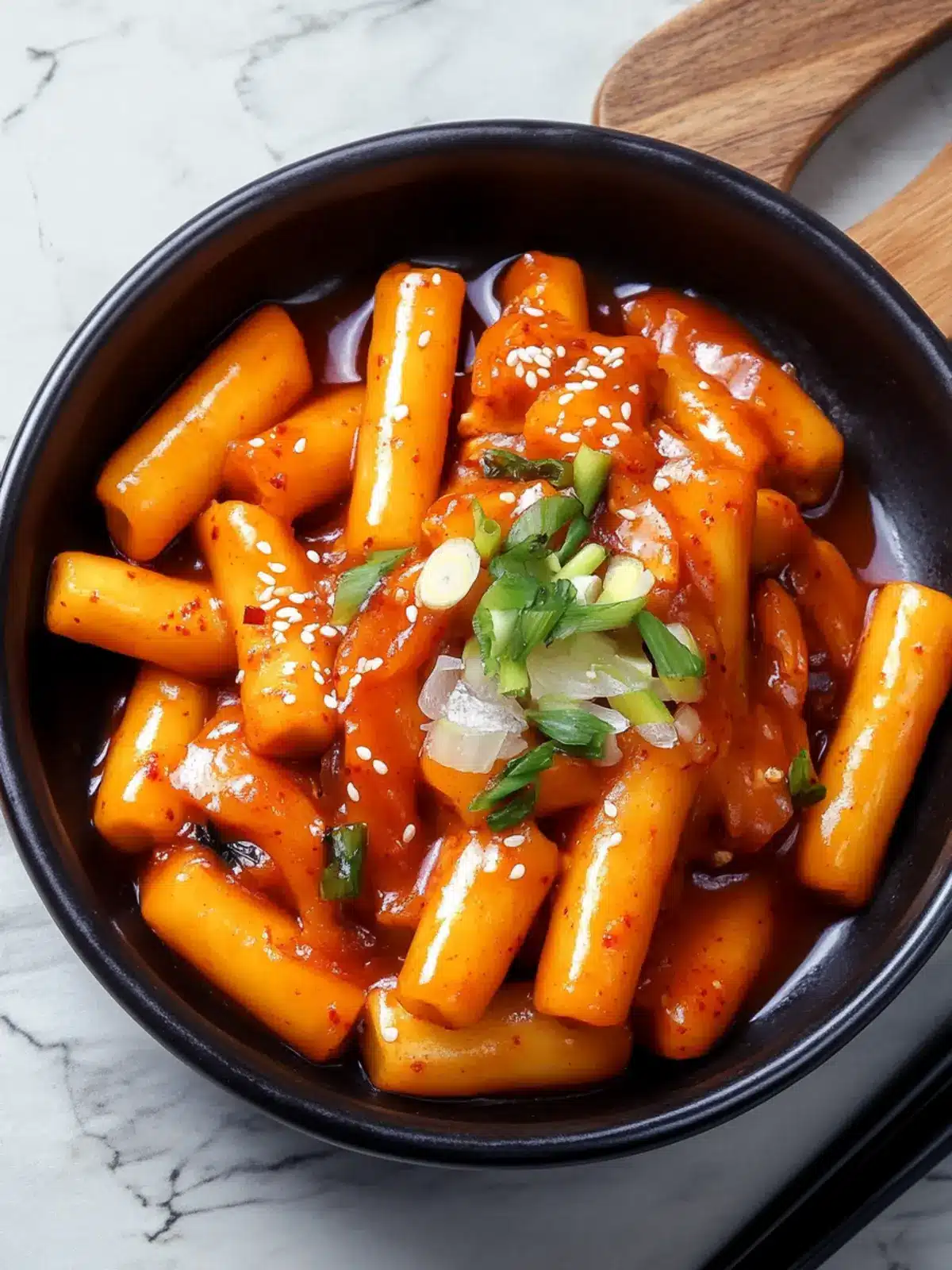
What to Serve with Korean Tteokbokki?
Pairing up delicious sides can transform your meal into an unforgettable feast for the senses.
Kimchi: This classic Korean side dish offers a tangy crunch that complements the spiciness of Tteokbokki, adding a refreshing balance.
Cucumber Salad: A cool, crisp salad with a hint of vinegar provides a delightful contrast to the heat, cleansing the palate perfectly.
Soft-boiled Eggs: Add some richness and protein by serving soft-boiled eggs alongside your Tteokbokki they soak up the sauce wonderfully!
Barley Tea: This traditional beverage complements the dish with its nutty flavor and helps cool the heat from the spicy sauce.
Pickled Radish: The sweetness and crunch of pickled radish slices are a fantastic complement, helping to offset the dish’s bold flavors.
Spicy Seafood Soup: Consider a light and brothy seafood soup as an appetizer; it warms you up while setting the stage for the spicy Tteokbokki.
Mochi Dessert: For something sweet to end your meal, consider serving mochi; its chewy texture echoes the rice cakes and finishes things off on a perfect note.
Fried Chicken: This crispy, savory dish pairs delightfully with Tteokbokki, as the contrasting textures create a satisfying feast.
Fruit Platter: Fresh fruits like watermelon or oranges add a hydrating and sweet touch, making them a refreshing finish after the heat.
How to Store and Freeze Korean Tteokbokki
Fridge: Store leftover Tteokbokki in an airtight container for up to 2 days. Reheat gently on the stove with a splash of water or broth to restore its delightful texture.
Freezer: While not ideal, you can freeze Korean Tteokbokki for up to 1 month. Portion it into freezer-safe bags, squeezing out as much air as possible before sealing.
Reheating: When ready to enjoy again, thaw overnight in the fridge and reheat on the stovetop, adding a little liquid to keep it from drying out.
Tip: Enjoy fresh Tteokbokki for the best flavor and texture, but properly stored leftovers can still satisfy your cravings.
Make Ahead Options
Making Korean Tteokbokki ahead of time can be a game-changer for busy weeknights! You can prepare the soaked rice cakes and sliced vegetables (like onions and carrots) up to 24 hours in advance; simply store them in an airtight container in the fridge to keep them fresh. If you’re using fish cakes, they can be sliced and refrigerated as well. When you’re ready to serve, heat your broth or water with the sauce ingredients, then add the prepped rice cakes and veggies, stirring until everything is heated through. This method ensures the Tteokbokki remains just as delicious while saving you precious time in the kitchen!
Expert Tips for Korean Tteokbokki
Soak Properly: Ensure the rice cakes are soaked in warm water for at least 10 minutes to achieve the ideal chewy texture.
Monitor Sauce Consistency: If your sauce gets too thick, add a splash of water or broth to maintain the right coating for your Korean Tteokbokki.
Fresh Ingredients Matter: Using fresh vegetables and quality fish cakes will enhance the overall flavor and texture of the dish.
Adjust Spice Level: Taste as you go! Modify the amount of gochujang and gochugaru based on your family’s spice tolerance.
Garnish with Love: Don t skip the green onions and sesame seeds; they add a pop of flavor and color that elevates your Tteokbokki.
Korean Tteokbokki Variations & Substitutions
Feel free to explore different flavors and textures as you customize your Tteokbokki experience!
Vegetarian: Use tofu or shiitake mushrooms instead of fish cakes for a hearty vegan alternative packed with flavor.
Extra Veggies: Add cabbage, bell peppers, or zucchini to boost nutrition and layer in vibrant colors, making each bite a delight.
Gluten-Free: Swap soy sauce for tamari or coconut aminos to keep your Tteokbokki free from gluten without sacrificing flavor.
Sweetness: Instead of sugar, try a touch of honey or maple syrup to bring a natural sweetness that compliments the spice beautifully.
Heat Levels: Adjust spiciness by varying the amount of gochujang and gochugaru, or incorporate milder chili paste for those who prefer less heat.
Richness: For creaminess, experiment with a little coconut milk added to the sauce, enhancing the overall texture and flavor profile!
Noodle Twist: Try including some udon noodles or glass noodles alongside the rice cakes for an interesting texture that elevates your dish.
Garnish Options: Replace green onions with cilantro or fresh basil for a garden-fresh twist that adds a new dimension to the dish.
Korean Tteokbokki Recipe FAQs
What kind of rice cakes should I use for Tteokbokki?
Absolutely! For authentic Korean Tteokbokki, use cylindrical Korean rice cakes known as Tteok. They should be soft and chewy, and I recommend soaking them in warm water for about 10 minutes before cooking to achieve that perfect texture.
How long can I store leftover Tteokbokki?
Leftover Tteokbokki can be stored in an airtight container in the fridge for up to 2 days. When reheating, gently warm it on the stove, adding a splash of water or broth to keep it from drying out. It’s a quick fix that revives its delightful chewiness!
Can I freeze Tteokbokki, and how do I do it?
Very much! If you’re looking to freeze your Tteokbokki, portion it into freezer-safe bags, ensuring to squeeze out as much air as possible. It can be stored for up to 1 month. When you want to enjoy it again, thaw it overnight in the fridge and reheat on the stovetop with a bit of added liquid for moisture.
What should I do if my Tteokbokki sauce is too thick?
If your sauce becomes too thick during cooking, don t worry! Simply add a small splash of water or broth to the pot and stir until you achieve the desired consistency. Keep stirring occasionally until your Tteokbokki is back to that luscious coating we all love.
Are there any dietary considerations I should be aware of?
Definitely! If you’re serving Tteokbokki to guests or family, be mindful of dietary restrictions. It contains gluten from the soy sauce, and if you’re looking for a gluten-free version, use tamari instead. Additionally, if your guests are vegan, you can skip the fish cakes and hard-boiled eggs substituting tofu provides a nice texture while keeping things plant-based!
How spicy is Tteokbokki, and can I adjust the spiciness?
The spiciness of Tteokbokki comes from the gochujang and gochugaru. You can absolutely adjust the heat! Start with less gochujang and gradually increase as you taste, allowing you to create a dish that suits your comfort level. Don t be shy to experiment it s all about making it delicious for you!