
Delicious Korean Bossam: Perfect Boiled Pork Wraps for Sharing
Last Updated on May 8, 2026 by juliarecipez
There s something utterly delightful about gathering around a table filled with vibrant flavors and shared laughter. When I first tried Korean Bossam, a traditional dish of tender boiled pork wraps, I felt a sense of comfort wash over me. Imagine succulent pork belly, slowly simmered to perfection, served alongside crisp cabbage and zesty radish salad. Each bite is a celebration of textures and tastes rich, meaty, and refreshing all at once.
This dish is not just about food; it s about connection. Perfect for family gatherings or a cozy dinner with friends, the communal nature of Bossam invites everyone to get involved, wrapping their own creations just the way they like. With the right ingredients, you can transform an ordinary evening into an unforgettable culinary experience. So, let s roll up our sleeves and dive into making these mouthwatering Korean Boiled Pork Wraps that are sure to impress and bring everyone to the table!
Why is Korean Bossam a must-try?
Simple preparation: Making Korean Bossam is easier than it looks! With just a few ingredients and steps, you can create a dish that feels gourmet.
Flavor explosion: The rich, tender pork belly pairs beautifully with the crisp cabbage and zesty radish salad, providing a burst of flavors in every bite.
Perfect for sharing: Bossam isn’t just a meal it’s a communal experience that brings family and friends together, making it ideal for gatherings.
Endless variations: Feel free to experiment! Change up your toppings with pickled veggies or spicy sauces for a personal twist.
Impressive yet approachable: Whether you’re a novice cook or a seasoned chef, this dish impresses without the stress, making it a fantastic addition to your recipe repertoire. Try it out for your next family night or special occasion!
Korean Bossam Ingredients
Discover how to make the perfect Korean Bossam with these essential ingredients that elevate your dish.
For the Pork
- Pork Belly This tender cut is essential for that melt-in-your-mouth experience; pork shoulder can be a leaner alternative.
- Water A necessary base for boiling, creating a flavorful broth to enhance the pork.
- Onion Adds a touch of sweetness and depth; yellow onion works perfectly if you can’t find the other.
- Garlic Fresh garlic boosts flavor; it s the aromatic backbone of your broth.
- Ginger Provides warmth and a subtle spice; fresh slices are recommended for the best flavor.
- Green Onions Adds a fresh pop of aroma; chop them finely for a delightful touch.
- Doenjang (fermented soybean paste) This umami powerhouse enriches the broth, but feel free to swap it with miso paste if needed.
- Soy Sauce Gives the broth a salty depth; tamari serves well for a gluten-free version.
- Mirin (optional) A sweet addition that enhances the flavor; rice vinegar mixed with sugar can stand in if you don’t have it.
- Black Peppercorns Freshly cracked provides a complexity to your broth; choose them for a deeper flavor.
- Bay Leaves These infuse calming aromatic notes; remember to remove them before serving!
For the Radish Salad
- Korean Radish/Daiikon The star of the Musaengchae salad; swap with regular radish if you’re in a pinch.
- Gochugaru (Korean red pepper flakes) This adds spice and beautiful color to your salad; adjust to control the heat level.
- Sugar Helps balance flavors, optional depending on your preference; a little goes a long way!
- Salt Essential for seasoning; adjust to your liking for the best taste.
- Sesame Oil Lends a nutty essence to your salad; you can substitute with olive oil if needed.
- Vinegar Adds acidity for a flavor lift; rice vinegar pairs wonderfully here.
- Minced Garlic Elevates the radish salad s flavor; fresh is ideal!
- Sesame Seeds A lovely garnish that adds nuttiness; feel free to omit if you’re out.
For the Wraps
- Napa Cabbage Leaves These serve as the perfect wrap; lettuce can be a lighter substitute if desired.
- Perilla Leaves An optional garnish that introduces a unique flavor; mint leaves make a nice stand-in.
- Fresh Garlic Slices Adds flavor in your wraps; use sparingly to avoid overwhelming the dish.
For Dipping and Sides
- Ssamjang (Korean dipping sauce) This is essential for wrapping, but a soy-based sauce can work in a pinch.
- Kimchi A traditional spicy side dish to round out your meal; any variety you love will work.
With all these ingredients at the ready, you’re just a few steps away from creating unforgettable Korean Bossam that your friends and family will adore!
How to Make Korean Bossam
Prepare the broth: In a large pot, combine water, onion, garlic, ginger, green onions, doenjang, soy sauce, mirin, black peppercorns, and bay leaves. Bring to a boil and embrace the fragrant aroma!
Add the pork: Rinse the pork belly under cold water to remove any impurities. Submerge it in the boiling broth, reduce the heat, and simmer for 1.5 hours. Skim off any foam that rises to the surface for a clear broth.
Make the radish salad: While the pork is simmering, mix julienned radish with salt and sugar in a bowl. Let it sit for 10 minutes to draw out moisture, then drain. Combine it with gochugaru, sesame oil, vinegar, minced garlic, and sesame seeds, and chill until serving.
Check for tenderness: After 1.5 hours, check the pork by pierced with a skewer. If tender, remove it and let it rest for 10 minutes before slicing thinly (about ½ cm thick).
Steam the cabbage leaves: Place the Napa cabbage leaves in a steamer and steam for about 35 minutes until tender yet still vibrant in color.
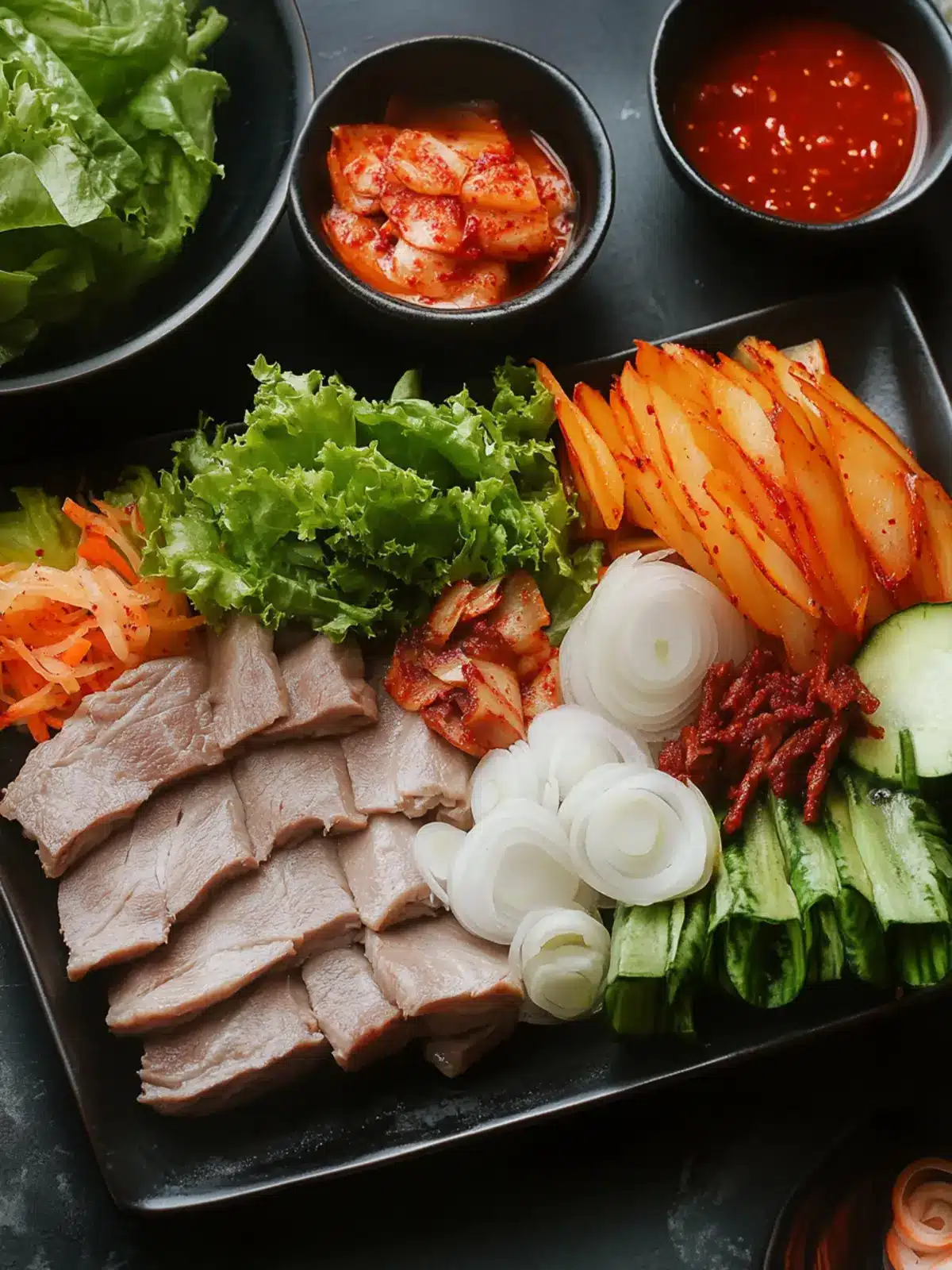
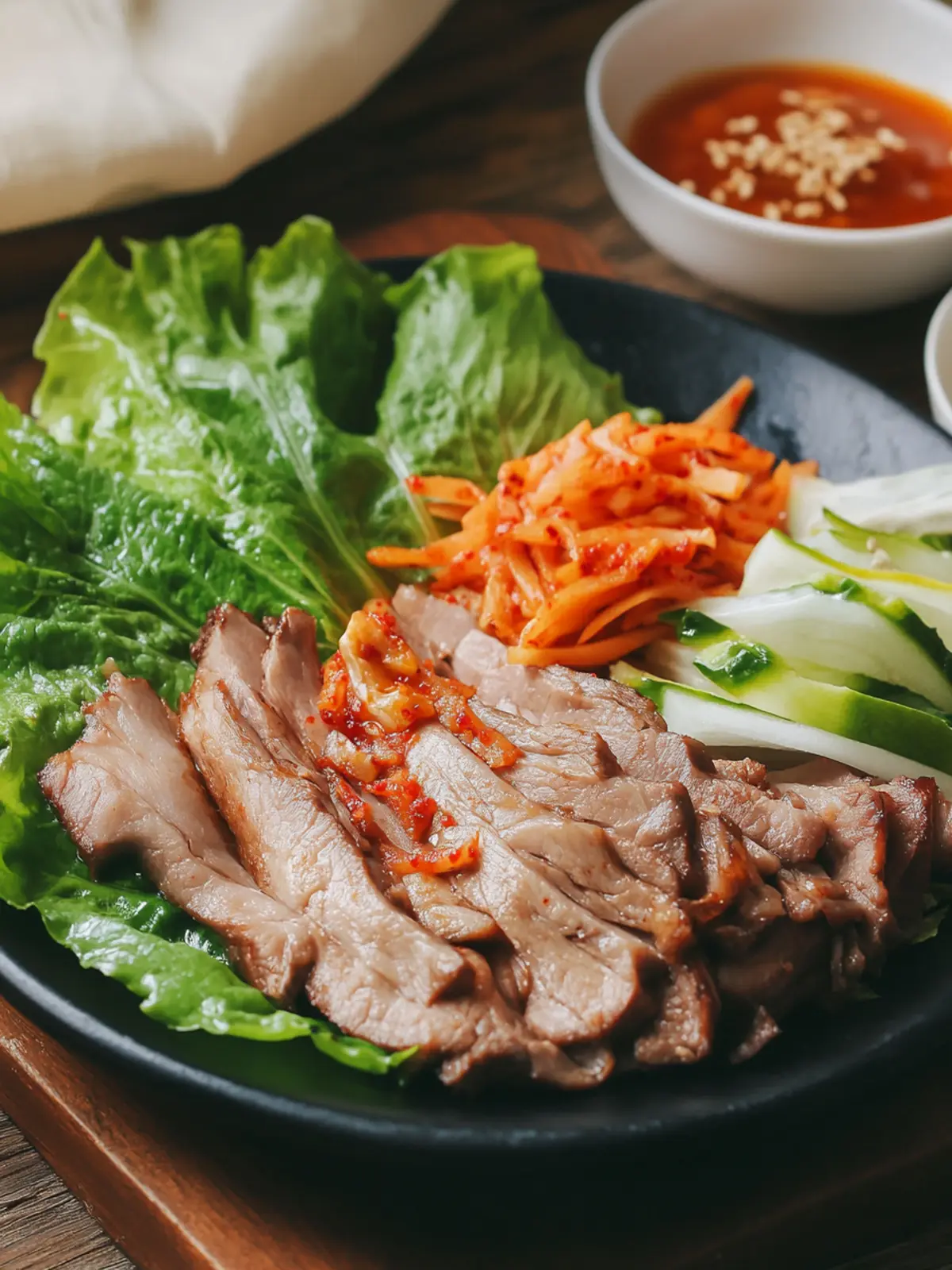
Prepare for serving: Arrange the sliced pork, cabbage leaves, perilla leaves, radish salad, garlic slices, ssamjang, and kimchi on a large platter, inviting everyone to dig in!
Enjoy the wraps: To eat, take a cabbage leaf, fill it with a slice of pork, a spoonful of radish salad, a slice of garlic, and a drizzle of ssamjang. Wrap it up and savor the delightful mix of flavors!
Optional: Pair with a cold Korean rice wine for an authentic experience!
Exact quantities are listed in the recipe card below.
How to Store and Freeze Korean Bossam
Fridge: Store leftover pork in an airtight container for up to 3 days; reheat gently on the stovetop to retain moisture.
Freezer: Freeze sliced pork belly in an airtight container or freezer bag for up to 3 months; thaw in the refrigerator before reheating.
Radish Salad: Keep the radish salad in a separate container in the fridge for up to 2 days; it’s best enjoyed fresh for optimal crunch.
Serving Tips: When ready to enjoy, set the table with fresh cabbage leaves and ensure your favorite dipping sauces are ready to enhance the delightful flavors of Korean Bossam!
Expert Tips for Korean Bossam
Pork Tenderness: Check tenderness by piercing with a skewer; if it s not tender enough, continue simmering until it is.
Skim for Clarity: Regularly skim off foam during cooking for a clearer broth, enhancing the final presentation of your Korean Bossam.
Customize Your Wraps: Encourage creativity by providing varied toppings like pickled veggies or spicy sauces, making each wrap a unique delight for family and friends.
Chill the Salad: Let the radish salad chill for a bit to meld flavors and maintain its crisp texture, enhancing the overall dining experience.
Arrange Beautifully: Presentation matters take time to arrange the pork and accompaniments nicely on a platter for an inviting meal that beckons everyone to the table!
Korean Bossam Variations
Feel free to unleash your creativity and make this dish uniquely yours!
Pickled Vegetables: Swap fresh veggies for pickled ones in your wraps for an added tang and crunch.
Spicy Twist: Add diced jalapeños or sliced hot peppers into your wraps for a fiery kick that will elevate the flavors.
Miso Alternative: If you can’t find doenjang, use miso paste in your broth for a different but equally delicious depth of flavor.
Lettuce Wrappers: For a lighter version, substitute Napa cabbage with crisp lettuce leaves, perfect for a refreshing bite.
Nutty Flavor: Drizzle a bit of almond or peanut sauce over the pork for an unexpected nutty twist that pairs beautifully with the cabbage.
Vary the Salad: Try adding crunchy cucumber or carrot strips to the radish salad for extra texture and freshness.
Herb Garnish: Fresh cilantro or basil can add an aromatic layer to each wrap, bringing a burst of flavor with every bite.
Umami Boost: Incorporate a bit of shiitake mushrooms or fermented black beans into the broth for an additional layer of umami richness.
Make Ahead Options
Korean Bossam is a fantastic recipe for meal prep, allowing you to enjoy flavorful wraps with minimal effort during busy weeknights! You can prepare the pork belly up to 24 hours in advance by boiling it, allowing it to cool completely before slicing and storing it in an airtight container in the refrigerator. The radish salad can also be made up to 3 days ahead; just keep it sealed to maintain freshness. When you’re ready to serve, simply steam the Napa cabbage leaves for about 3-5 minutes and reheat the pork gently to retain its succulent texture. This way, you can savor homemade Korean Bossam that tastes just as delicious as if it were freshly made!
What to Serve with Korean Bossam?
Creating an unforgettable meal means pairing your Bossam with delicious sides that enhance its fantastic flavors.
- Korean Kimchi: This spicy, fermented side dish adds a delightful zing and crunch, perfectly complementing the rich pork.
- Musaengchae (Radish Salad): Fresh, vibrant, and zesty, this salad offers balance to the meal with its cooling elements and tangy flavors.
- Steamed Rice: Soft, fluffy rice acts as a wonderful base, soaking up the savory juices from the pork and the dipping sauces.
- Ssamjang (Dipping Sauce): This thick, savory-sweet sauce is essential for an authentic experience, bringing everything together in each bite.
- Pickled Vegetables: A variety of pickles, such as cucumbers or carrots, add brightness and acidity, enhancing the overall flavor profile.
- Makgeolli (Korean Rice Wine): This slightly sweet, milky liquor pairs beautifully with the dish, adding a classic touch to your meal.
- Sesame Noodles: Serve these as a refreshing dish on the side, their nutty flavor and chewy texture contrasting the richness of the pork.
- Banchan: A selection of small side dishes like seasoned spinach or sweet potato can add delightful variety and additional nutrition to your spread.
These pairings will not only uplift your dining experience but also invite joy and togetherness at the table as you savor every bite of your delicious Korean Bossam!
Korean Bossam (Boiled Pork Wraps) Recipe FAQs
What type of pork is best for Korean Bossam?
Absolutely! Pork belly is the traditional choice for making Korean Bossam, as it yields a succulent, melt-in-your-mouth texture. However, if you’re looking for a leaner option, pork shoulder can also work beautifully but may not be as rich.
How should I store leftover Korean Bossam?
Very easy! Store leftover pork in an airtight container in the fridge for up to 3 days. When you’re ready to enjoy it again, reheat it gently on the stovetop to preserve its tenderness and juiciness.
Can I freeze Korean Bossam?
Yes indeed! To freeze your leftover sliced pork belly, place it in an airtight container or freezer bag. It will keep well for up to 3 months. When you re ready to use it, simply thaw it in the refrigerator overnight before reheating.
What should I do if my pork isn t tender after cooking?
If your pork isn t tender after the designated cooking time, don t worry! Just continue simmering it on low heat. Check every 10 to 15 minutes by piercing it with a skewer. The goal is to achieve that melt-in-your-mouth tenderness, so patience is key!
Is Korean Bossam a suitable dish for those with allergies?
A bit of caution is always a good idea! If you or your guests have allergies, be sure to check all sauces and condiments carefully. The traditional recipe contains soy sauce, which can be glutenous. Using tamari is a great gluten-free substitute. Also, be mindful of the ingredients in kimchi if you plan to include this spicy side!
How do I keep my radish salad fresh?
To maintain the crunchiness of your radish salad, store it separately from the other components in the fridge. It will stay fresh for up to 2 days. It s best enjoyed right after preparation to keep the flavors vibrant and the texture crisp!