
Discover Malaysian Nasi Kerabu: Irresistible Blue Rice Delight
Last Updated on May 8, 2026 by juliarecipez
The first time I laid eyes on a plate of Nasi Kerabu, I couldn t help but be enchanted by its vibrant hues. The deep blue rice, colored with butterfly pea flowers and nestled next to perfectly grilled fish, looked like a work of art. But it s not just the visual allure that caught my attention; it was the aroma of fresh herbs mingling with the smokiness of the fish wafting through the kitchen that truly captivated me. As I tasted the delightful combination of flavors from the zing of lime to the warmth of turmeric each bite transported me to the sun-drenched streets of Malaysia.
This dish isn t just food; it s a celebration of culture and tradition, typically enjoyed during leisurely meals shared with family and friends. Whether you re looking to break free from fast food monotony or wanting to impress your guests with something uniquely flavorful, this Malaysian Nasi Kerabu is your answer. Join me as we explore this healthy and visually stunning dish, and let s bring a taste of Malaysia to your kitchen!
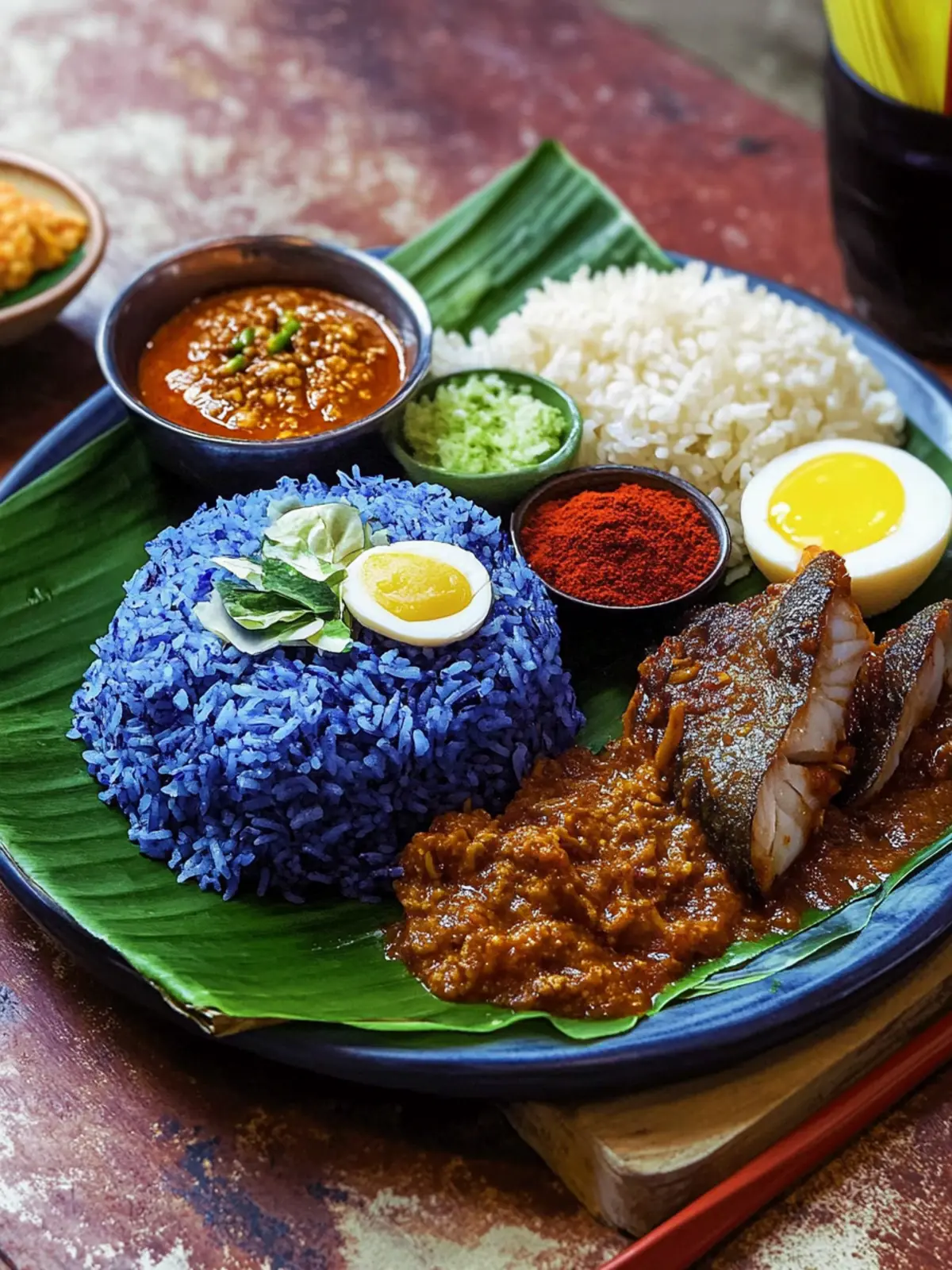
Why is Malaysian Nasi Kerabu so special?
Vibrant Presentation: The striking blue rice from butterfly pea flowers not only catches the eye but also sparks conversations at the dinner table.
Health Benefits: Full of fresh herbs and vegetables, this dish is a nutritious option packed with flavor.
Simple to Prepare: With straightforward steps, even home cooks can achieve restaurant-quality results.
Cultural Experience: Enjoying Nasi Kerabu is an invitation to savor Malay culture and share in community dining traditions.
Crowd-Pleaser: Perfect for gatherings, its vibrant colors and flavors bring joy to any meal, enticing everyone to dig in!
Elevate your meal plans with this beautifully crafted dish, and enjoy a culinary escape that resonates with warmth and tradition.
Malaysian Nasi Kerabu Ingredients
Get ready to dive into the vibrant world of Nasi Kerabu with these key ingredients!
For the Rice
- Jasmine or Basmati Rice Use quality long-grain rice for a fluffy texture that complements the colorful toppings.
- Butterfly Pea Flower Water Steep 15 dried flowers in hot water for a stunning blue hue that makes the rice visually captivating.
- Lemongrass Bruise it to release aromatic oils, enhancing the fragrant profile of your dish.
- Pandan Leaf Adds a naturally sweet aroma; knot it for easy removal later.
- Salt Vital for elevating the overall flavor of the dish.
For the Fish
- Mackerel (or Firm White Fish) This is the star protein; you can substitute with salmon or any firm white fish if desired.
- Turmeric Powder Essential for seasoning the fish, giving it an earthy depth and beautiful color.
- Lime Juice Adds a burst of acidity to brighten the dish; you can also use lemon juice as a substitute.
- Oil Choose any high-heat oil for grilling your fish to perfection.
For the Sambal
- Grated Coconut Key for making sambal, giving it a creamy texture and a hint of sweetness.
- Chillies, Shallots, Garlic, and Belacan These base ingredients bring heat and depth; adjust the number of chillies to match your spice tolerance.
For Fresh Crunch
- Bean Sprouts and Long Beans Fresh and crunchy elements; blanch them briefly to keep their vibrant colors.
- Herbs (Thai Basil, Daun Kesum, Cabbage, Torch Ginger, Cucumber) Finely sliced or shredded for added freshness and variety.
- Salted Egg and Keropok (Fish Crackers) Optional toppings that add unique flavor and texture to your plate.
For Extra Flavor
- Budu A fermented anchovy sauce that enhances umami, though it’s optional for those new to this flavor profile.
Each ingredient harmoniously comes together to create the stunning Malaysian Nasi Kerabu, a dish that truly captivates both the eye and the palate!
How to Make Malaysian Nasi Kerabu
Prepare flower water: Steep 15 dried butterfly pea flowers in hot water for about 10 minutes, then strain. This will create the stunning blue color for your rice, infusing it with a delightful aroma.
Rinse and mix rice: Rinse jasmine or basmati rice under cold water until it runs clear. Combine the rinsed rice with the butterfly pea flower water, lemongrass, pandan leaf, and a pinch of salt in a rice cooker, then cook according to your machine’s instructions until fluffy.
Marinate your fish: Take cleaned mackerel (or your choice of firm white fish) and rub it with turmeric, salt, and a splash of lime juice. Let it marinate for 15-20 minutes, allowing the flavors to meld beautifully.
Grill the fish: Preheat your grill to medium heat and cook the marinated fish for about 5-7 minutes on each side until the skin is crispy and the flesh is easily flaked with a fork. Alternatively, roasting it in the oven works just as well.
Toast coconut for sambal: In a dry pan, toast grated coconut over medium heat until golden and fragrant. This adds a lovely creaminess and sweetness to your sambal.
Make the sambal: Blend or grind together chillies, shallots, garlic, and belacan into a smooth paste. Mix this paste with the toasted coconut for a flavorful sambal that packs a punch!
Prepare fresh veggies: Blanch bean sprouts and long beans briefly in boiling water, then give them a quick ice bath to maintain their vibrant color and crispness. Finely slice or shred the fresh herbs and vegetables to add a fresh crunch.
Fluff the rice: Once your blue rice is cooked, fluff it gently with a fork and remove the lemongrass and pandan leaf before serving.
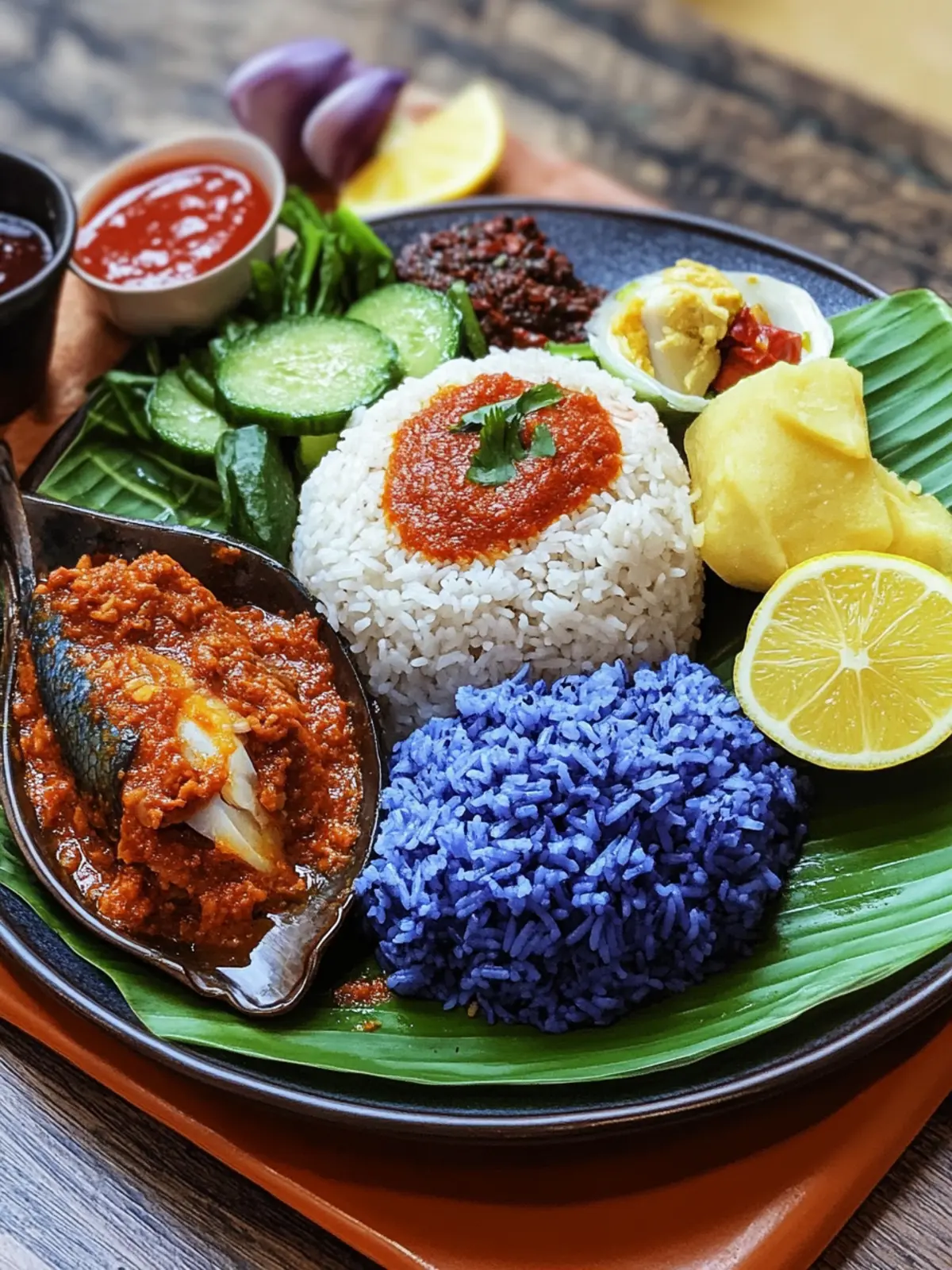
Assemble your plate: Start with a mound of the vibrant blue rice at the center, then artfully surround it with the fresh herbs, vegetables, and a generous portion of grilled fish on top.
Garnish and serve: Top off your dish with the sambal and optional salted egg for added flavor. Serve with crunchy keropok and a side of budu for a genuine Malaysian experience!
Optional: Garnish with extra lime wedges for a zesty touch.
Exact quantities are listed in the recipe card below.
Expert Tips for Malaysian Nasi Kerabu
Use Fresh Ingredients: Fresh herbs and spices will elevate the flavor of your Malaysian Nasi Kerabu. Always opt for quality when possible.
Marination Time Matters: Allow the fish to marinate adequately for at least 15-20 minutes. This helps infuse the flavors deeply, making each bite luscious and fulfilling.
Avoid Overcooking Vegetables: Blanch bean sprouts and long beans quickly to keep them crisp and colorful. Over-blanching will lead to a dull appearance and loss of crunch.
Perfect Your Grilling Technique: Grill the fish over medium heat, checking for a nice char. Cooking too high can burn the outside while leaving the inside undercooked.
Customize Your Spice Level: Adjust the number of chillies in the sambal according to your heat preference. Start with fewer, and you can always add more later.
What to Serve with Malaysian Nasi Kerabu?
Complement your feast with delightful dishes that elevate the flavors of this traditional Malaysian meal.
Fresh Mango Salad: The sweet and tangy profile of mango salad beautifully contrasts the savory elements in your Nasi Kerabu, creating a refreshing balance.
Coconut Curry Soup: A lightweight yet flavorful coconut curry soup adds warmth and spice, enriching your meal with its aromatic essence. It’s like a warm hug to your palate!
Grilled Vegetables: Seasonal grilled vegetables drizzled with a squeeze of lime enhance the fresh, healthy aspect of your meal while harmonizing with the herbaceous notes of Nasi Kerabu.
Roti Jala: This delicate lace pancake is perfect for scooping up sambal or enjoying alongside the blue rice a delightful addition that brings a fun texture to your dish.
Iced Lemongrass Tea: Sip on chilled lemongrass tea to cleanse your palate between bites, invigorating the senses with its fragrant aroma and refreshing taste.
Coconut Sago Pudding: As a dessert, the creamy sweetness of coconut sago pudding provides a delightful end to your meal, perfectly balancing the spices from Nasi Kerabu.
Keropok (Fish Crackers): Serve crispy keropok on the side for a crunchy contrast; they add a delightful texture while embodying a traditional Malaysian touch.
Fried Banana Fritters: These sweet treats offer a warm, comforting dessert option that kids and adults alike will love, filling your kitchen with irresistible aromatic goodness.
Chilli Sauce: A little extra chili sauce on the side allows spice lovers to kick things up a notch, ensuring each person can customize their heat level to personal taste!
Embrace the vibrant harmony of flavors and textures for an unforgettable dining experience.
Make Ahead Options
Nasi Kerabu is perfect for meal prep, allowing you to save time during busy weeks! You can prepare the butterfly pea flower water and rice up to 24 hours in advance simply store the cooked rice in an airtight container in the refrigerator to maintain its vibrant color. Additionally, marinate the fish and keep it in the fridge for up to 3 days before grilling; this enhances the flavor while saving you crucial time on cooking day. When you’re ready to serve, just grill the marinated fish for about 5-7 minutes, fluff the rice, and assemble with your fresh herbs and sambal for a delicious meal that feels just as fresh as the day you prepped it!
How to Store and Freeze Malaysian Nasi Kerabu
Fridge: Store leftovers in an airtight container for up to 2 days. To maintain freshness, keep the rice and garnishes separate.
Freezer: For longer storage, freeze the blue rice (without toppings) in a freezer-safe bag for up to 1 month. Thaw in the fridge overnight before reheating.
Reheating: Reheat the rice in the microwave with a splash of water, covering it to retain moisture. For grilled fish, a quick pan-sear or oven method can revive its flavors beautifully.
Avoiding Waste: While it’s best enjoyed fresh, consider splitting large batches into smaller portions before storing to minimize frequent reheating and maintain quality.
Malaysian Nasi Kerabu Variations
Feel free to explore these creative twists on Nasi Kerabu, making each meal a new culinary adventure!
Protein Swap: Replace mackerel with chicken or tofu for a lighter or vegetarian option, opening up new flavor profiles and textures.
Herb Mix-Up: Experiment with different herbs like mint or cilantro to give your dish a refreshing kick, or a more aromatic twist that brightens every bite.
Veggie Boost: Add extra crunch with diced radishes or bell peppers, offering a colorful contrast while enhancing the overall nutrition of your meal.
Spicy Kick: Increase the heat by adding more chillies to your sambal or spicing it up with a dash of your favorite hot sauce, making it perfect for spice lovers!
Coconut Creaminess: For a richer sambal, mix in a splash of coconut milk along with your toasted coconut, making every mouthful irresistibly creamy.
Zesty Lime Variation: Swap lime juice for lemon for a different zing that pairs beautifully with the fish and herbs, refreshing your palate.
Sambal Surprise: Try using different types of sambal, such as sambal belacan or sambal luak, to experiment with flavors while keeping your meal exciting.
Buda-Licious Addition: Vary your umami by enjoying it with different fermented sauces like sambal terasi or even a drizzle of Japanese soy sauce for a contemporary spin.
Unleash your creativity in the kitchen, and enjoy the delicious journey that is your customized Nasi Kerabu!
Malaysian Nasi Kerabu Recipe FAQs
What kind of butterfly pea flowers should I use?
Absolutely! Look for dried butterfly pea flowers, which are common in Asian grocery stores or online. They should be intact and colorful without any signs of mold. Steep 15 flowers in hot water for about 10 minutes for optimal color and aroma.
How should I store leftovers?
Very important! After your meal, transfer any leftovers to an airtight container. The blue rice can be kept in the fridge for up to 2 days. For the best taste, store the rice and garnishes separately to maintain freshness.
Can I freeze the rice?
Of course! You can freeze the blue rice for up to 1 month. Make sure it’s cooled completely, then place it in a freezer-safe bag, squeezing out as much air as possible. To reheat, simply thaw in the fridge overnight and warm it in the microwave with a splash of water to keep it moist.
What if my sambal is too spicy?
No worries! If your sambal turns out too spicy, simply balance it out with more grated coconut or even a tad of sugar to mellow the heat. Adding a little lime juice can also add brightness that helps cut the spice.
Can I customize the protein?
Absolutely! Nasi Kerabu is quite versatile. If you prefer a lighter option, you can substitute mackerel with grilled chicken or even tofu for a vegetarian version. Each protein adds its unique flavor profile to this delightful dish.
Are there any dietary considerations with this recipe?
Definitely! Keep in mind that sambal contains belacan, which is made from shrimp and is not suitable for those with shellfish allergies. Additionally, if you’re serving to pets, be sure ingredients like garlic and certain spices may be harmful to them, so keep their portions in check.