
Savor Authentic Vietnamese Bún Bò Huế: Spicy Beef Bliss
Last Updated on May 8, 2026 by juliarecipez
Picture this: on a chilly evening, the comforting aroma of simmering spices fills my kitchen, instantly lifting my spirits. That was my introduction to Bún Bò Huế, a Vietnamese dish with a rich history and even richer flavors. This spicy beef noodle soup combines tender meat, aromatic herbs, and a deeply satisfying broth that dances on the palate. When I first spooned up a bowl bursting with vibrant herbs and slurpy noodles, I felt like I had discovered a culinary secret, a warm hug in a bowl.
Whether you’re seeking to impress dinner guests or simply want to bring a taste of Vietnam to your home, Bún Bò Huế is your answer. It’s a dish that s as versatile as it is comforting add a kick with chili oil, or keep it mild; the choice is yours! Join me as we dive into this flavorful journey and transform your kitchen into a haven of heartwarming aromas and unforgettable tastes.
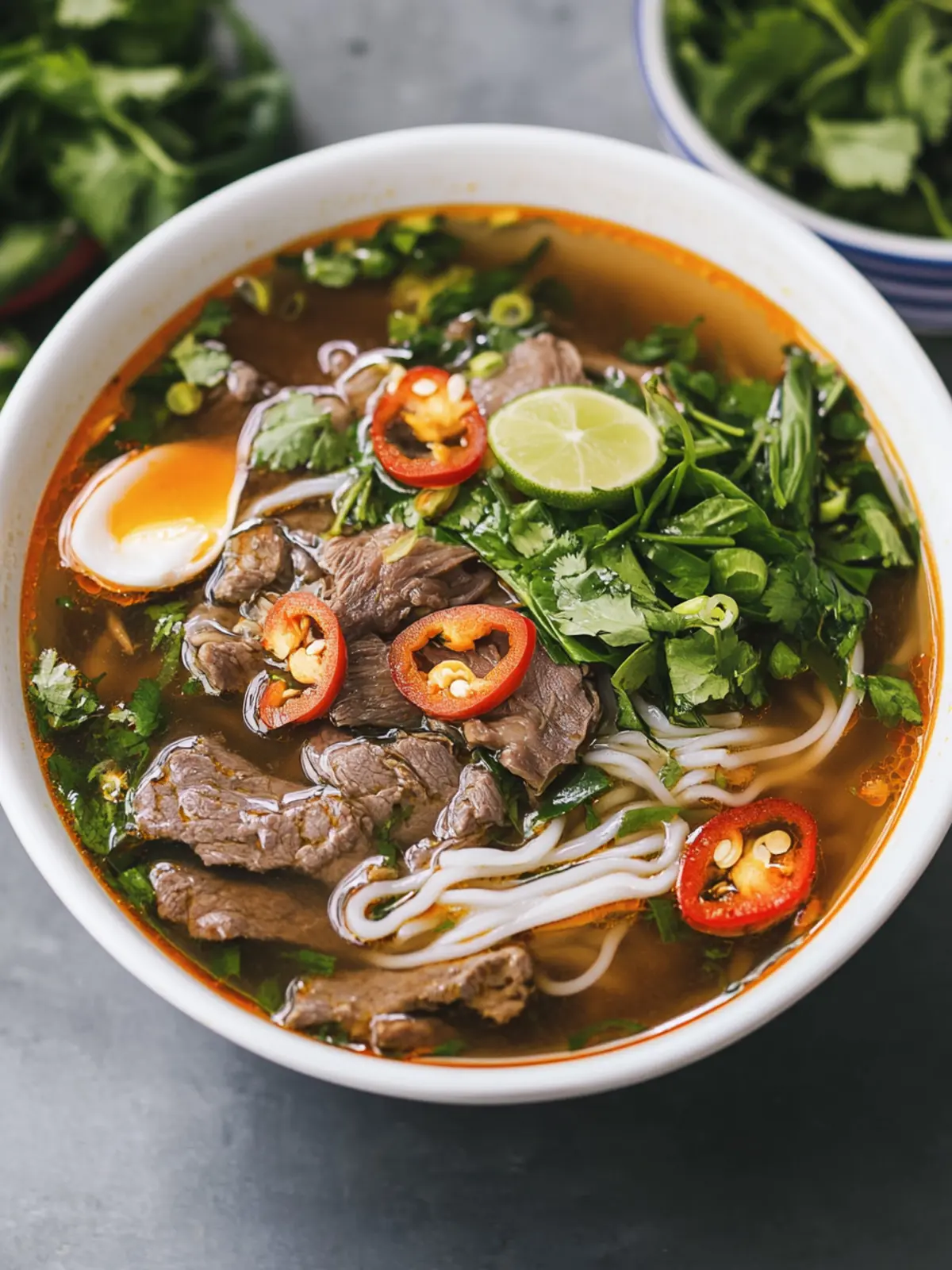
Why is Vietnamese Bún Bò Huế so special?
Comforting Warmth: This bowl of spicy beef noodle soup wraps you in warmth, perfect for chilly nights.
Bold Flavors: Infused with aromatic spices like lemongrass and ginger, each spoonful is an adventure for your taste buds.
Customizable Delight: Make it your own add chili oil for a spicy kick or keep it mild with fresh herbs.
Impressive Meal: Serve it to guests and watch their faces light up with every slurp.
Culinary Journey: Experience a dish steeped in Vietnamese culture that elevates your cooking repertoire.
Easy to Make: With straightforward steps, you ll find this hearty, satisfying meal a breeze to whip up!
Vietnamese Bún Bò Huế Ingredients
Dive into the essential components of this flavorful soup!
For the Broth
Beef Shank with Bone The primary protein that enriches the broth’s flavor; chuck roast can be a good substitution for a different profile.
Pork Hock or Pork Knuckle Adds a deeper savory taste; feel free to omit for a lighter version.
Lemongrass Infuses the soup with a fresh, citrusy aroma; remember to trim and smash it before adding.
Shallots Enhances the broth s sweetness and complexity; onions are a suitable alternative if shallots are unavailable.
Ginger Provides warmth and a spicy kick; use fresh for the best flavor, avoiding powdered versions.
Garlic Adds a robust flavor; increase the amount for a more pronounced background taste.
Shrimp Paste (Mắm Ruá»c) Imparts a unique umami depth; fish sauce can be used as an alternative, though the flavor will differ.
Fish Sauce Essential for bringing saltiness and savory flavor; opt for a high-quality brand for the best result.
Chili Oil (optional) Great for adding extra spice; can be omitted if you prefer a milder soup.
Water The base for your broth; using filtered water can elevate the overall taste.
For the Noodles
Bún (thick round rice noodles) The main ingredient that absorbs the broth; follow package instructions for cooking.
For the Toppings
Beef Brisket (optional) Adds heartiness and texture; feel free to omit for a leaner soup.
Pork Blood Cubes (optional) Traditionally used for richness; skip them for a non-traditional approach.
Fresh Herbs (Thai Basil, Cilantro, Mint) Brightens the dish with freshness; customize with your favorites for garnish.
White Onion Great for garnishing, providing a crunch and flavor contrast.
Green Onions Adds a mild onion flavor; chives can be used as a substitute or omitted.
Red Chili Peppers Introduces freshness and enhances the spice; jalapeños work well for a similar effect.
Lime Wedges Essential for adding tanginess when served; balances the flavors beautifully.
This list ensures you’ll have all the components to create a bowl of Vietnamese Bún Bò Huế that s bursting with flavor and joy!
How to Make Vietnamese Bún Bò Huế
Prepare the Broth: In a large pot, bring 4-5 cups of water to a boil. Blanch the beef shank and pork hock for 3-4 minutes; then rinse under cold water to remove impurities.
Simmer the Broth: Add the blanched meats, lemongrass, shallots, ginger, garlic, and enough water to cover the ingredients. Bring to a boil, then reduce to simmer for 1-1.5 hours until the meat is tender.
Add Flavor Enhancers: After 30 minutes of simmering, stir in the shrimp paste and fish sauce. Taste the broth and adjust seasonings as it continues to cook.
Cook the Noodles: Prepare the Bún according to the package instructions, ensuring they are cooked to your liking. Drain and set aside.
Finish the Broth: Once the meat is tender, slice it thinly. Strain the broth for clarity, discarding the solids, and return the broth to the pot.
Serve: Divide the cooked noodles into bowls, generously top with the sliced beef, and ladle the hot broth over them. Garnish with white onions, fresh herbs, green onions, and red chilies.
Customize: Serve with lime wedges, encouraging everyone to adjust their bowls to their taste by squeezing fresh lime juice.
Optional: Add a sprinkle of chili oil for an extra kick.
Exact quantities are listed in the recipe card below.
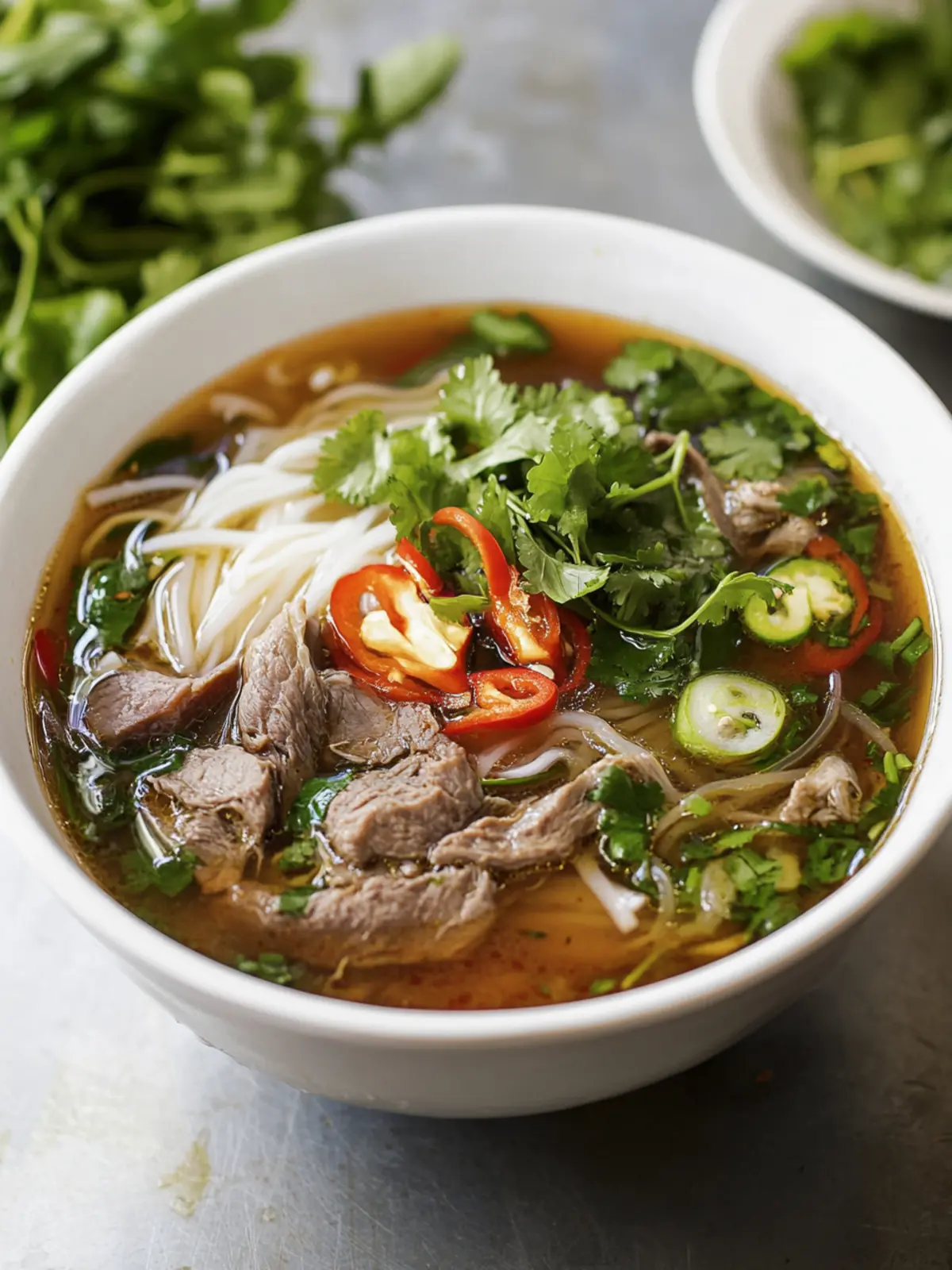
Expert Tips for Vietnamese Bún Bò Huế
Clear Broth: Blanch the meats thoroughly and rinse them well to prevent cloudiness in your broth, ensuring a beautifully clear soup.
Simmer Time: Do not rush the simmering; allowing 1-1.5 hours is essential for extracting deep flavors and creating that rich, satisfying broth.
Seasoning Check: Always taste the broth before serving; adjusting the seasonings helps balance the flavors in your Vietnamese Bún Bò Huế, keeping it deliciously robust.
Meat Texture: Slice the beef when it s tender but still warm; this helps maintain a juicy texture and makes for easier serving in the bowls.
Herb Freshness: Use fresh herbs right before serving to elevate flavors; they add a burst of freshness that complements the hearty soup beautifully.
Vietnamese Bún Bò Huế Variations & Substitutions
Feel free to let your creativity shine by customizing this beloved soup to match your taste preferences!
Vegetarian Option: Substitute beef with tofu or mushrooms, simmering them in the broth for a hearty plant-based alternative.
Gluten-Free Noodles: Use gluten-free rice noodles to accommodate dietary needs without losing that essential spongy texture.
Extra Spice: Add sriracha or crushed red pepper flakes for an added heat punch that elevates each bite to a fiery experience.
Intensified Umami: Spice up the broth by using miso paste in place of shrimp paste, giving it a deeper, rich flavor profile.
Citrusy Zest: Mix in a splash of lime juice along with zest for a brighter, tangy note that lifts the dish wonderfully.
Coconut Cream: To create a unique fusion, swirl in some coconut cream for a creamy texture that softens the spice and adds a tropical twist.
Root Veggies: Toss in sliced carrots or daikon radish while simmering for extra sweetness and a delightful crunch contrast to the noodles.
Broth Depth: Incorporate a touch of star anise or cinnamon stick during the simmering process to infuse your broth with aromatic warmth, making each spoonful a comforting embrace.
What to Serve with Vietnamese Bún Bò Huế?
Transform your soup into a delightful meal that dances on your taste buds!
- Vietnamese Crusty Bread: Perfect for dipping, this crunchy baguette complements the warm broth beautifully. It offers a delightful texture contrast with each mouthful.
- Fresh Spring Rolls: Filled with shrimp and herbs, these will add a fresh, light crunch that balances the hearty soup. Serve with a tangy dipping sauce to bring extra flavor.
- Mango Salad: This sweet and zesty salad brings a refreshing contrast to the spicy broth. The crunchy cucumbers and vibrant mango enhance the meal while bringing a pop of color.
- Thai Basil & Mint: Garnish your bowl with these fragrant leaves for a burst of freshness. Their aromatic flavors amplify the soup, creating a fragrant experience with every spoonful.
- Chili Oil: Offer this on the side for those who crave a spicy kick. A few drops can elevate the broth and excite the palate!
- Iced Vietnamese Coffee: Finish your meal with a glass of this sweet, strong coffee. The rich flavors pair perfectly with the savory notes of Bún Bò Huế.
- Lychee or Coconut Sorbet: For a light dessert, these fruity options offer a sweet, refreshing end to your meal. Their coolness contrasts the warmth of the soup wonderfully.
Make Ahead Options
Prepare your Vietnamese Bún Bò Huế ahead of time to save precious moments during busy weeknights! You can easily make the broth a day in advance; just refrigerate it after it cools. To maintain that mouthwatering flavor, ensure you store it in an airtight container, and remember to strain it to keep it clear. The noodles can be cooked and set aside for up to 24 hours, but be sure to toss them in a little oil to prevent sticking. When you’re ready to serve, simply reheat the broth on the stovetop and add the pre-cooked noodles. You’ll have a heartwarming meal that’s just as delicious, ready to enjoy without the fuss!
How to Store and Freeze Vietnamese Bún Bò Huế
Fridge: Store leftover broth and toppings separately in airtight containers for up to 3 days. This keeps the noodles from becoming soggy and maintains their texture.
Freezer: For longer storage, freeze the broth in portions for up to 3 months. Make sure to cool it completely before transferring to freezer-safe bags or containers.
Reheating: Reheat the broth over low heat, and add fresh noodles just before serving for the best experience. Always taste before serving to adjust the seasonings of your Vietnamese Bún Bò Huế.
Cooked Noodles: If you have leftover noodles, store them in the fridge for no more than 2 days. Reheat them quickly in boiling water before serving.
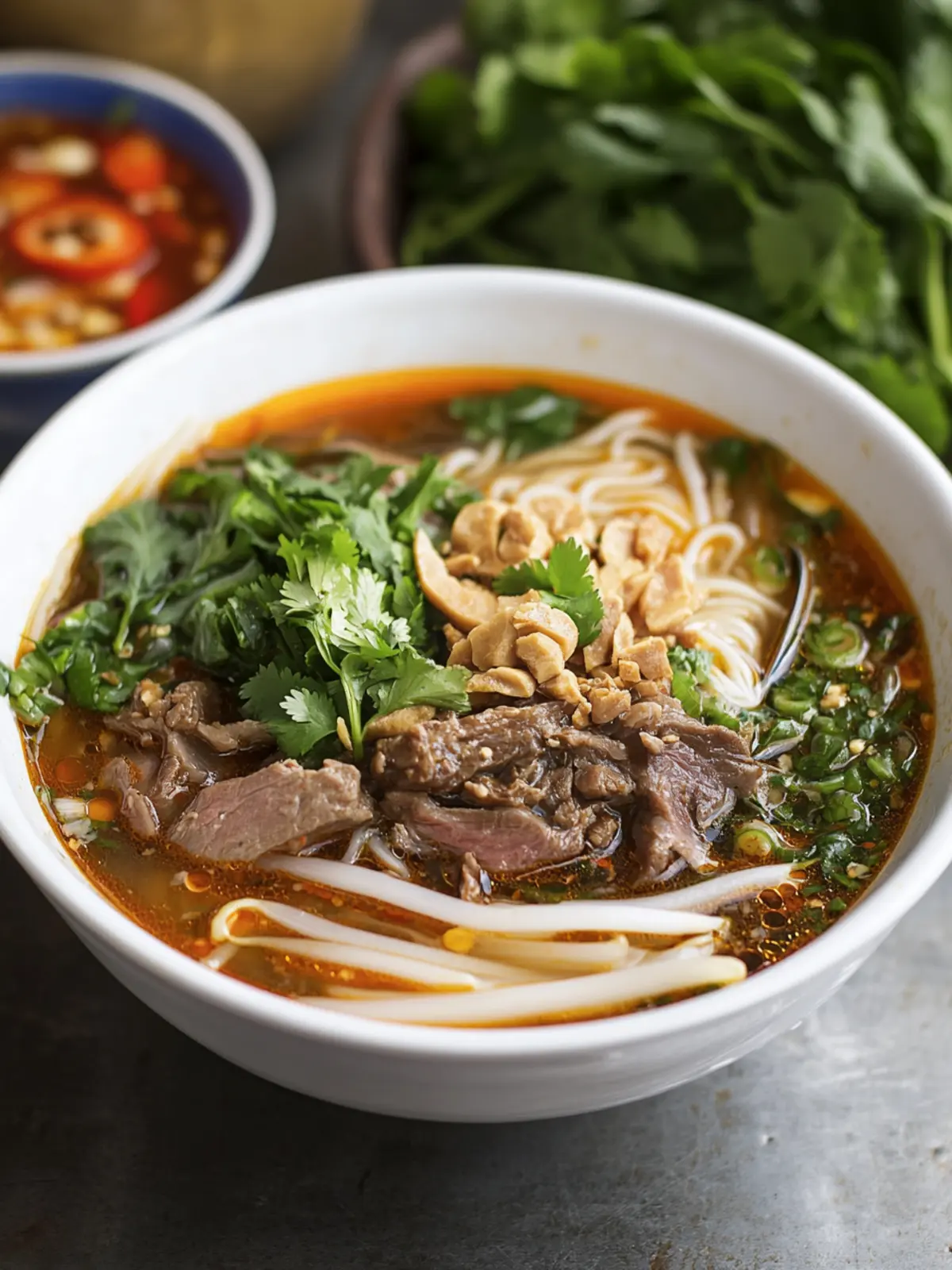
Vietnamese Bún Bò Huế Recipe FAQs
How do I select the best ingredients for Bún Bò Huế?
Absolutely, choosing fresh and ripe ingredients is key! Opt for firm beef shank with a deep red color and a little marbling for flavor. Lemongrass should be fresh and fragrant look for stalks that are bright green and firm. If possible, choose shallots that are smooth and glossy, and avoid any that feel soft or have dark spots.
How should I store leftover Bún Bò Huế?
For storing leftovers, it’s best to keep the broth, noodles, and toppings separate. Store the broth in an airtight container in the fridge for up to 3 days. The noodles can also be kept in the fridge for 2 days but should be reheated before serving. This method preserves texture and flavor, providing a fresh experience when you’re ready to enjoy it again!
Can I freeze Bún Bò Huế?
Yes, you can! To freeze the broth, let it cool completely, then transfer it to freezer-safe bags or containers. It can be frozen for up to 3 months. When reheating, do so over low heat and add fresh noodles just before serving for optimal taste! You can keep the noodles in the fridge for up to 2 days and reheat them quickly in boiling water when you’re ready.
What are some common troubleshooting tips for making Bún Bò Huế?
If your broth isn’t as rich as you’d like, ensure that you simmer it long enough at least 1 to 1.5 hours is essential for deep flavor extraction. If the broth turns out too salty, consider adding more water or cooking additional unsalted meats for a while to balance it out. Remember to strain the broth before serving to keep it clear!
Are there any dietary considerations for Bún Bò Huế?
Certainly! If you or your guests have allergies, substituting the shrimp paste with a gluten-free fish sauce works well. You can also make a vegetarian version by omitting the meats and using vegetable broth as a base, adding tofu or mushrooms for protein. Always communicate with your guests about any dietary needs you might accommodate!
What do I do if I’m missing some ingredients?
No problem! If you’ve missed lemongrass, you can use lime zest for citrusy flavor. Shallots can be replaced with onions, and for a vegetarian twist, simply skip the meat and focus on the rich broth with mushrooms or tofu. Flexibility is part of the fun! Just focus on keeping the essential flavors and your Bún Bò Huế will still be a delightful experience.