
Savory Korean Soup – A Fusion of Aromatic Flavors Awaits
Last Updated on May 8, 2026 by juliarecipez
As the first hints of autumn began to chill the air, I found myself craving something warm, hearty, and full of flavor. That’s when I stumbled upon this quick and delightful Korean soup that has become my go-to comfort food. Imagine cozying up with a steaming bowl filled with the zing of tangy kimchi, tender pieces of pork, or juicy tofu, all dancing together in rich, savory broth. Each sip takes you on a journey a fusion of aromatic flavors that warms both body and soul. In just 30 minutes, you can embrace the essence of Korean cuisine right in your home, making it the perfect antidote to those repetitive weeknight dinners. Whether you re a seasoned chef or just someone looking to spice up dinner, this soup will quickly capture your heart and palate!
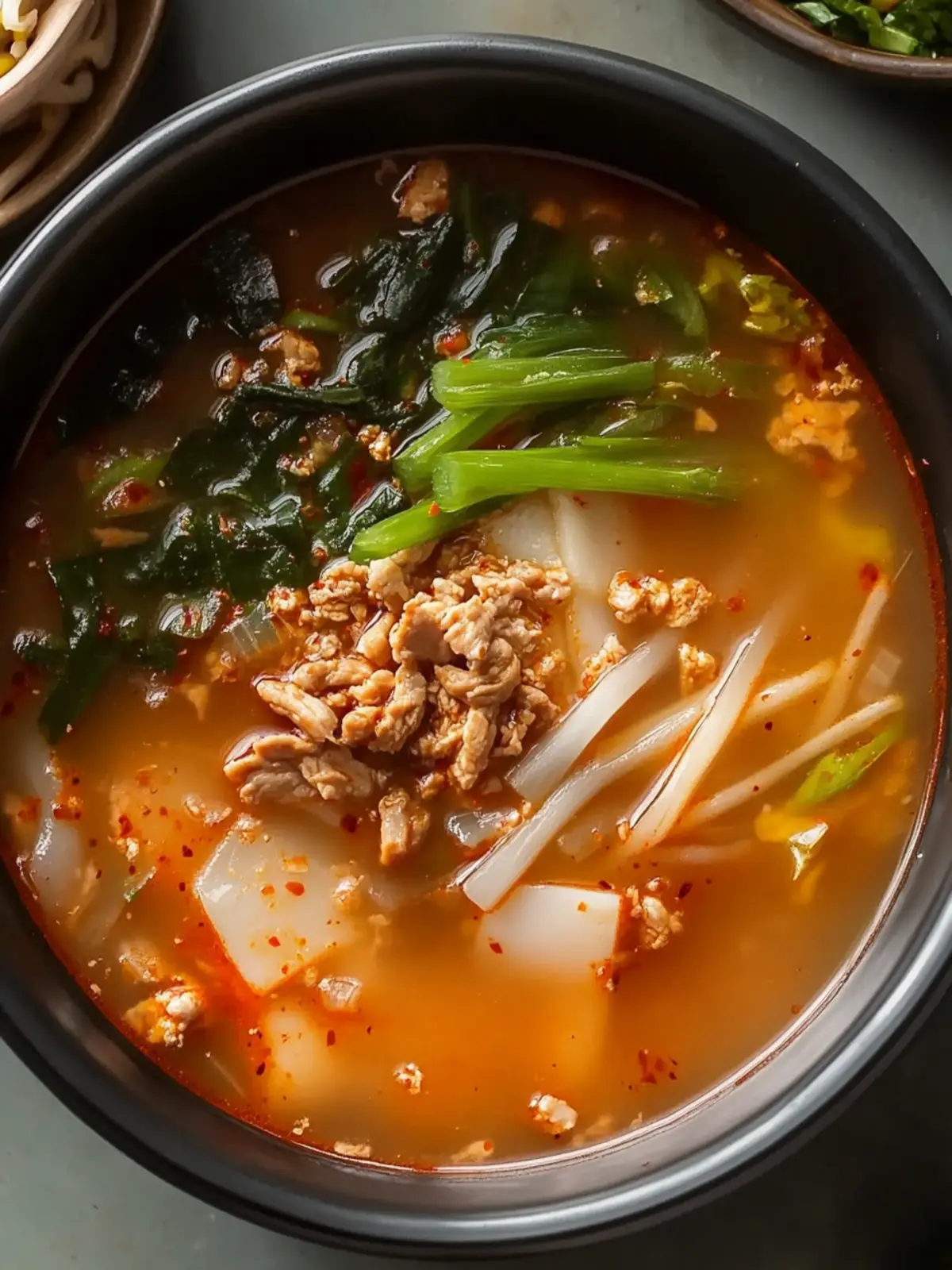
Why is this Korean Soup a must-try?
Speedy Preparation: In just 30 minutes, you can whip up this delightful dish, making it perfect for busy weeknights.
Aromatic Bliss: The fusion of tangy kimchi and savory broth creates an enticing aroma that fills your kitchen.
Customizable: Whether you prefer meat, tofu, or vegetables, there are plenty of options to suit your taste.
Nourishing and Comforting: Packed with nutrients from the kimchi and veggies, this soup not only delights but also nourishes your body.
Crowd-Pleasing Flavors: A hearty dish that’s sure to impress family and friends perfect for gatherings or cozy nights in.
Don’t hesitate to explore other variation ideas to add even more flair to your meals!
Korean Soup Ingredients
For the Broth
Anchovy or Kelp Broth Serves as a flavorful base; substitute with vegetable broth for a vegetarian Korean soup.
Soy Sauce Provides saltiness and depth; use tamari for a gluten-free option.
Sugar Balances flavors; can be substituted with honey or coconut sugar.
For the Soup
Well-Fermented Kimchi Adds tanginess and depth; you can substitute with homemade kimchi or omit for a milder flavor.
Pork Belly or Beef (Optional) Provides richness and protein; can be replaced with chicken or omitted for a vegetarian version.
Firm Tofu Adds texture and protein; opt for silken tofu for a creamier consistency or leave out for a lighter soup.
For the Aromatics
Gochugaru (Korean Red Pepper) Infuses heat and color; consider using paprika for a less spicy alternative.
Gochujang (Red Pepper Paste) Adds umami and depth; this can be substituted with miso paste for a non-spicy option.
Minced Garlic Enhances aroma and flavor; fresh garlic is best, avoiding pre-minced varieties for freshness.
For Finishing Touches
Sliced Green Onions Adds freshness and crunch; substitute with chives if needed.
Sesame Oil Enhances aroma and flavor; can be replaced with olive oil for a different profile.
Explore the pleasure of creating your own Korean soup, crafting a comforting bowl that speaks to your taste buds!
How to Make Korean Soup
Prepare Broth: In a pot, combine anchovy or kelp broth and bring it to a gentle simmer. This savory foundation is key to a rich, flavor-packed soup.
Cook Base: If you’re using pork belly or beef, add it now. Sauté until browned, about 5 minutes, to infuse the broth with hearty goodness.
Add Aromatics: Stir in minced garlic, well-fermented kimchi, gochugaru, and gochujang, cooking for 1-2 minutes until everything is fragrant and colors brighten.
Combine Ingredients: Pour in soy sauce, sugar, and firm tofu, then bring the mix back to a simmer. Allow the flavors to meld your kitchen will smell divine!
Final Touches: Immediately before serving, add sliced green onions and a drizzle of sesame oil. Serve hot and enjoy the comforting, aromatic bliss.
Optional: Garnish with additional green onions for extra crunch and freshness.
Exact quantities are listed in the recipe card below.
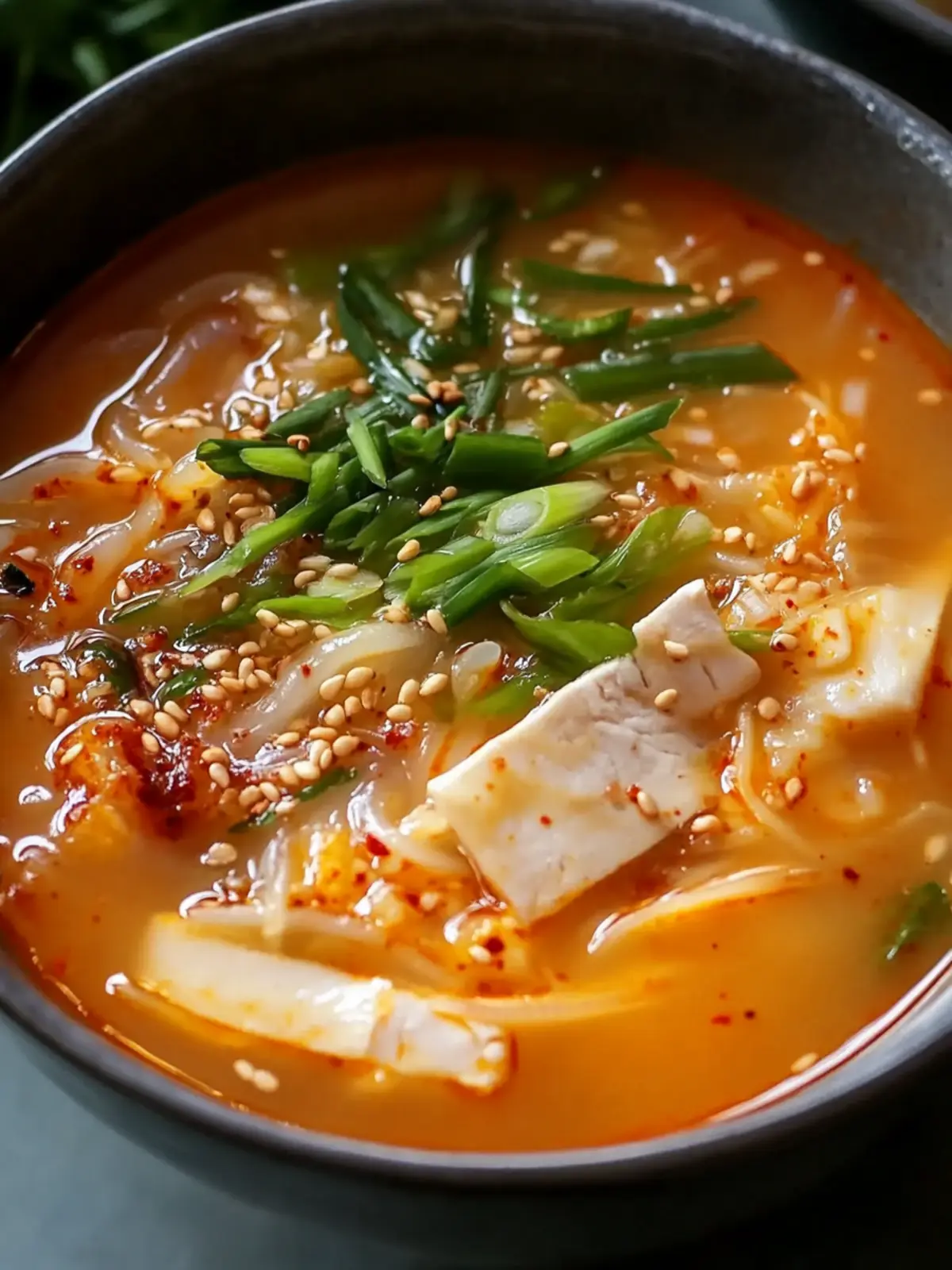
Korean Soup Variations
Get ready to spice things up with fun twists on your Korean soup recipe!
Dairy-Free: Omit any ingredients like cow s milk or cream, and enjoy the naturally rich flavor without dairy.
Vegetarian: Swap out pork belly for mushrooms or eggplant, ensuring all the savoriness is preserved in this comforting dish.
Spicy Kick: Add fresh sliced jalapeños or increase the amount of gochugaru to bring an extra layer of heat that warms you from the inside out.
Herb Fusion: Incorporate fresh herbs like cilantro or Thai basil to elevate the aromatic profile of your soup, adding a fresh twist to the traditional flavors.
Noodle Twist: Toss in some cooked ramen or udon noodles for a more filling experience that s absolutely slurp-worthy!
Coconut Cream: For a fragrant twist, use coconut milk in place of broth to create a sweet and creamy texture that complements the savory elements beautifully.
Veggie Boost: Increase the vegetable content by adding bok choy, zucchini, or carrots for more color, crunch, and nutrients, making each bowl more vibrant.
Shrimp Delight: Substitute the protein with shrimp for a fast-cooking, seafood version of this hearty soup, adding a touch of the ocean to your dining experience.
Expert Tips for Korean Soup
- Homemade Broth Boost: Using homemade broth will elevate the flavors of your Korean soup, making it even more savory and comforting.
- Heat Adjustment: Customize the spiciness by modifying the amount of gochugaru and gochujang according to your family’s taste preferences.
- Slow Cooker Option: For a deep and rich flavor profile, place all ingredients (except delicate ones) in a slow cooker and let them meld on low for 6-8 hours.
- Fresh Ingredients: Using fresh garlic and homemade or recent kimchi will significantly enhance the overall aroma and taste of your soup.
- Simple Variations: Don t hesitate to try different proteins or add extra veggies for more nutrients and flavors in your Korean soup.
Make Ahead Options
This comforting Korean soup is perfect for meal prep, allowing you to enjoy a delicious, homemade meal any night of the week! You can prepare the base of the soup broth, meat, and aromatics up to 24 hours in advance by refrigerating them in an airtight container. When you’re ready to enjoy, simply bring your prepped ingredients to a simmer, add the firm tofu, and finish with green onions and sesame oil for that fresh touch. To maintain quality, ensure that you store the broth and ingredients separately for optimal flavor retention, as this prevents the vegetables from becoming mushy. Cooking ahead not only saves time but also means you can savor a bowl of flavorful Korean soup without the last-minute rush!
How to Store and Freeze Korean Soup
Fridge: Store leftover Korean soup in an airtight container for up to 3 days. Ensure it’s fully cooled before sealing to maintain freshness.
Freezer: This soup can be frozen for up to 2 months. Use a freezer-safe container, leaving space for expansion. Reheat thoroughly before serving.
Reheating: Reheat gently over low heat on the stove, stirring occasionally. For even heat distribution, consider adding a splash of water or broth if it thickens too much.
What to Serve with 30-Minute Korean Soup?
Imagine indulging in a nourishing bowl of warm soup paired with delightful sides that elevate your culinary experience.
- Steamed Rice: Serves as a perfect base, soaking up that delicious broth and balancing flavors.
- Spicy Kimchi Pancakes: These crispy, savory pancakes echo the kimchi’s tang and bring an exciting crunch to your meal.
- Pickled Vegetables: A vibrant side that adds a zingy contrast, enhancing the overall experience with brightness and tartness.
- Savory Asian Noodles: Whether stir-fried or served cold, these add delightful texture and a filling component, rounding out your meal beautifully.
- Sesame-Infused Cucumbers: Crisp and refreshing, they complement the warmth of the soup, providing a cooling effect that’s delightful in every bite.
- Soy Garlic Edamame: Packed with protein and flavor, these little bites are perfect for snacking while enjoying your soup, enhancing the Asian theme of the meal.
- Sweet Potato Buns: Soft and slightly sweet, they’re a tasty dipper for your soup, offering a comforting sweetness that contrasts wonderfully with the savory broth.
- Chilled Fruit Salad: Light and refreshing, this sweet mix rounds out your meal with bright flavors, perfect for cleansing the palate.
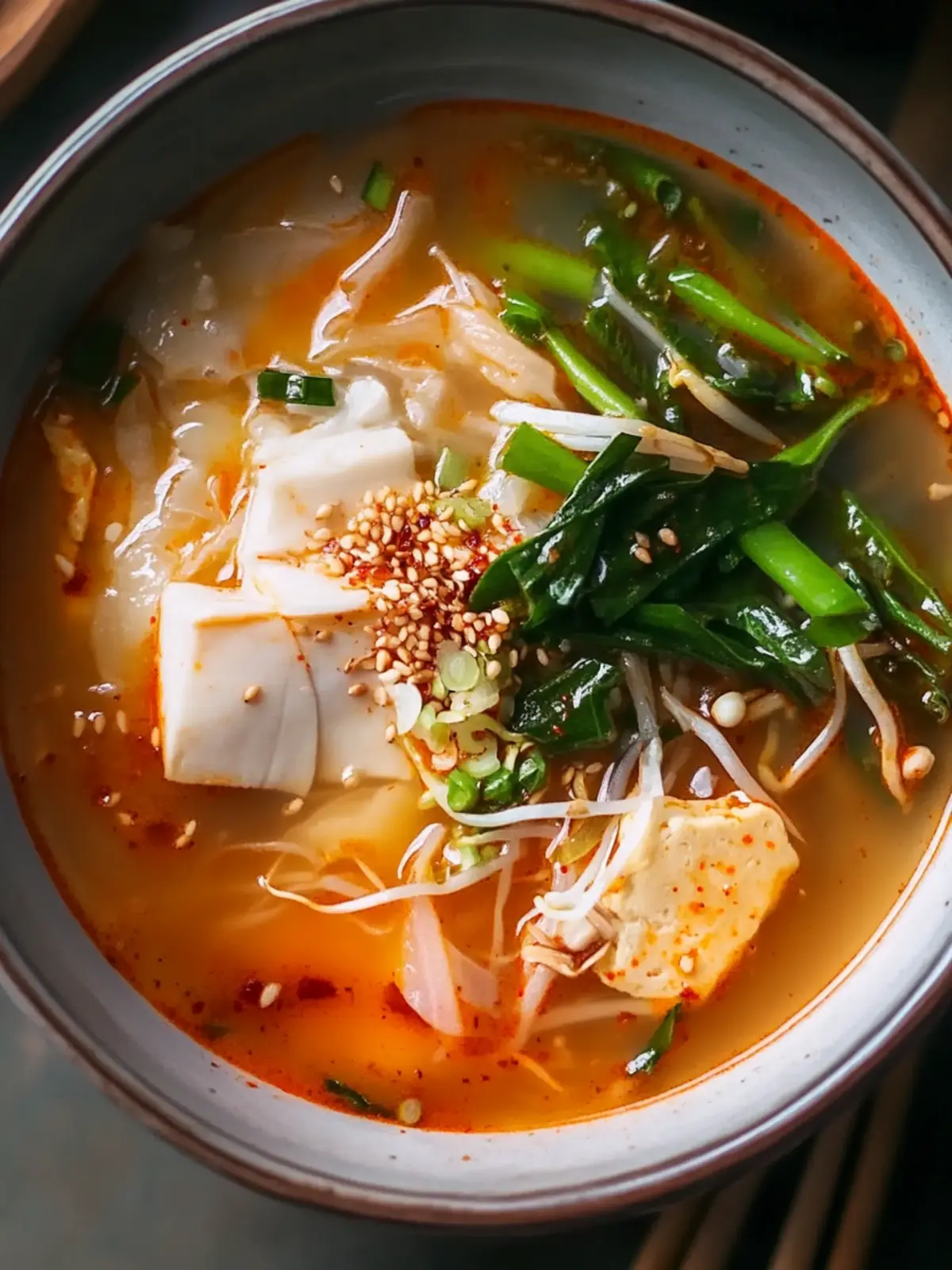
30-Minute Authentic Korean Soup Recipe FAQs
What type of kimchi should I use?
Absolutely! Well-fermented kimchi is the best choice as it adds tanginess and depth to your Korean soup. If you can t find it, homemade kimchi is a fantastic substitute, or you can omit it for a milder flavor. Just keep in mind that the soup may lose some of its signature zing without it!
How should I store leftovers?
Great question! Leftover Korean soup can be stored in an airtight container in the refrigerator for up to 3 days. Ensure it s fully cooled before sealing to keep it fresh. When you re ready to enjoy it again, give it a gentle reheat on the stove over low heat.
Can I freeze this soup?
Very much so! This Korean soup can be frozen for up to 2 months. Use a freezer-safe container and remember to leave a little space at the top for expansion as it freezes. When you re ready to eat, just thaw it in the refrigerator overnight and then reheat gently on the stove, adding a splash of water if it gets too thick.
What if the soup turns out too spicy?
No worries at all! If your Korean soup ends up too spicy, you can balance it out by adding a bit more sugar or a splash of coconut milk to mellow the heat. You could also stir in more tofu or even some cooked rice to absorb the spice. Customize it to suit your taste!
Can I make this recipe vegetarian or vegan?
Absolutely! To make your Korean soup vegetarian or vegan, simply replace the anchovy or kelp broth with vegetable broth. You can omit the pork or beef entirely and add in more veggies like mushrooms or zucchini, and use firm tofu or tempeh as your protein source. It ll still be delightful and satisfying!
Any tips for selecting fresh ingredients?
When choosing your ingredients, look for kimchi with vibrant colors and a tangy smell. For garlic, opt for fresh cloves rather than pre-minced variants for a robust flavor. Your gochugaru should be vibrant red and aromatic spices should always have that fresh scent! Enjoy the process of picking out fresh ingredients; it truly enhances your cooking experience!