
Hearty Japanese Tonkotsu Ramen with Creamy Pork Broth Magic
Last Updated on May 8, 2026 by juliarecipez
When the chill of winter sets in, nothing warms the soul quite like a steaming bowl of homemade Tonkotsu Ramen. The rich, creamy pork bone broth sings with deep umami flavors, enveloping tender, fresh noodles in a velvety embrace that transports me straight to the bustling streets of Fukuoka. I first discovered this dish during a cozy night in with friends, and its heartiness has become an essential part of our gatherings ever since.
What I love most about this Tonkotsu Ramen is its versatility whether you prefer a lighter touch with your broth or a pop of spice from chili oil, this recipe invites customization to match your taste. With ingredients that meld together beautifully over a long, slow simmer, each bowl not only satisfies hunger but also creates a sensory experience that s second to none. So, roll up your sleeves and let s dive into crafting this comforting culinary delight that will bring warmth and joy to your table!
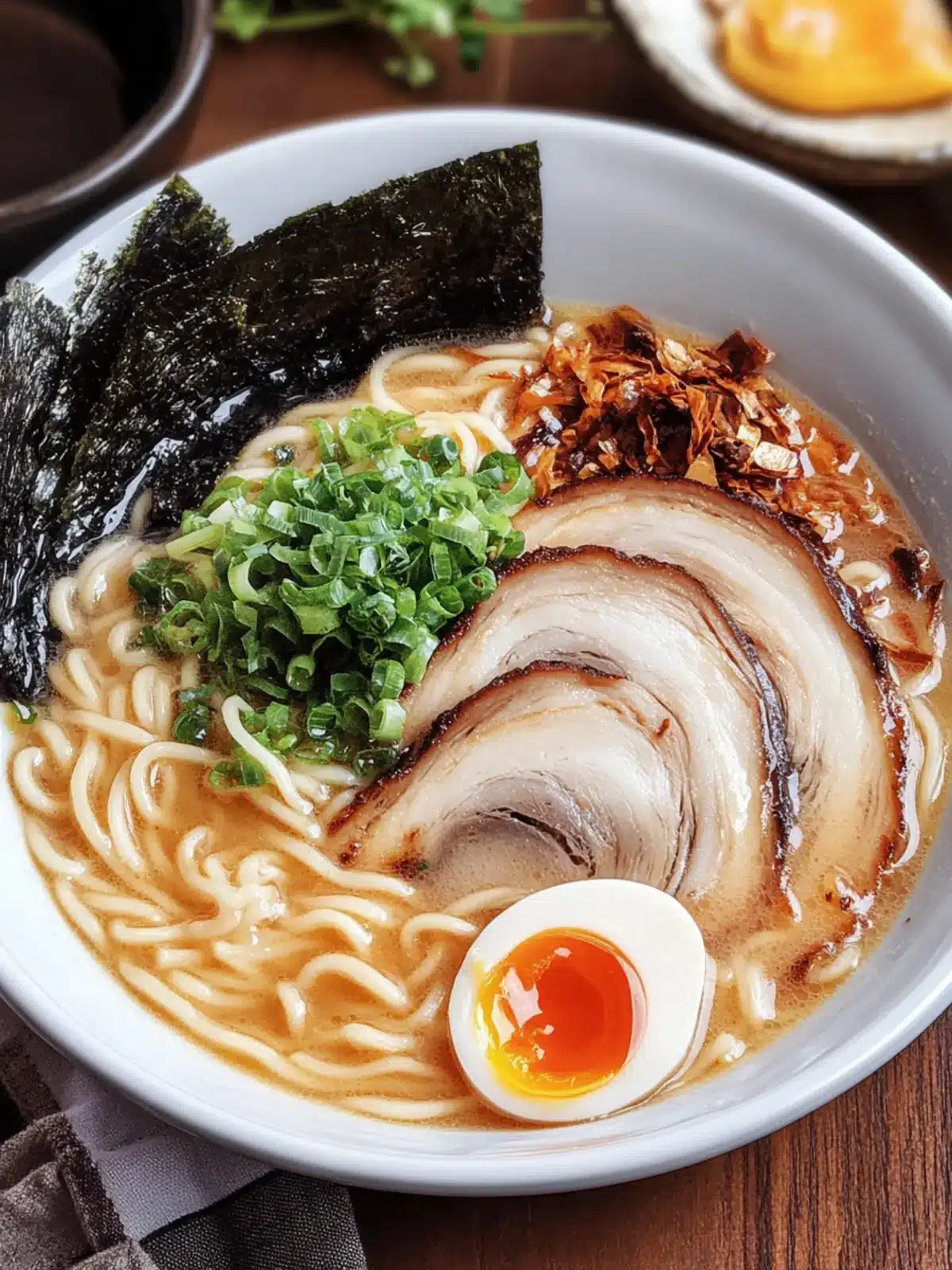
Why is Japanese Tonkotsu Ramen a Must-Try?
Comforting and Cozy: This dish embodies the ultimate in comfort food, perfect for family dinners or a gathering with friends.
Umami Explosion: The creamy pork bone broth is rich with deep, savory flavors that will leave your taste buds dancing.
Endless Customization: Tailor it to your taste, whether you prefer a richer broth or unique toppings like mushrooms and narutomaki.
Easy to Make: With just a little patience, you can create a restaurant-quality ramen at home, impressing your guests with your culinary skills.
Cultural Delight: Experience the essence of Japanese cuisine and bring a piece of Fukuoka to your kitchen, transforming ordinary evenings into exceptional dining experiences.
Japanese Tonkotsu Ramen Ingredients
For the Broth
- Pork Bones Essential for broth richness; use neck and leg bones for the best flavor.
- Onion Adds sweetness and depth to the broth, enhancing overall taste.
- Garlic Enhances the flavor profile; feel free to adjust the quantity based on your preference.
- Ginger Provides warmth and a subtle hint of spice that complements the broth.
- Leek Contributes a mild onion flavor to the ensemble.
- Water Serves as the base for the broth; enough to cover all the bones well.
For Seasoning
- Soy Sauce A key seasoning for color and umami flavor in your Tonkotsu Ramen.
- Mirin Adds a touch of sweetness; can be substituted with sake and sugar if necessary.
- Sake Enriches the broth s depth of flavor and enhances the chashu pork.
- Sugar Balances the saltiness and provides complexity to the dish.
For the Toppings
- Pork Belly The main topping; tenderized and flavored for a rich, melt-in-your-mouth experience.
- Fresh Ramen Noodles Delivers structure and comfort; choose a firm texture for a satisfying bite.
- Soft Boiled Eggs (Ajitsuke Tamago) Adds creaminess; marinating them enhances their flavor tremendously.
- Spring Onions Fresh garnish; green parts are preferred for a burst of color.
- Nori (Seaweed) Provides an umami element and a delightful texture contrast.
- Sesame Seeds (Optional) Offers a nutty flavor and pleasant crunch.
Now that you have all the essential ingredients to make your Japanese Tonkotsu Ramen truly spectacular, let s dive into the cooking process!
How to Make Japanese Tonkotsu Ramen
Prepare Broth: Rinse the pork bones under cold water and place them in a pot. Boil for 10 minutes to remove impurities; then drain, rinse again, and set aside.
Simmer Broth: In a large pot, combine the cleaned bones with enough water to cover. Add the onion, garlic, ginger, and leek. Bring to a boil, then reduce the heat and simmer for 10-12 hours. Skim off any foam that forms for clarity.
Make Chashu Pork: Place the pork belly in a separate pot with soy sauce, sake, mirin, and sugar. Simmer on low heat for about 1.5 hours until tender. Once cooled, slice into thin pieces.
Make Tare: In a small saucepan, combine soy sauce, mirin, sake, and sugar. Simmer on low until the mixture reduces slightly, creating a flavorful base for your ramen.
Cook Eggs: Bring a pot of water to a boil and gently add the eggs. Boil for 6.5 minutes, then cool in an ice bath. Peel and marinate in the chashu liquid for 2-3 hours for extra flavor.
Final Assembly: Strain the broth through a fine mesh sieve into a large pot. Cook the fresh ramen noodles according to package instructions until firm. In serving bowls, mix in tare, ladle the hot broth over the noodles, and top with chashu, marinated eggs, spring onions, and nori.
Serve: Enjoy your homemade Japanese Tonkotsu Ramen immediately for the best texture; you can add optional toppings like sesame seeds or pickled ginger for an extra flavor kick.
Optional: Drizzle a bit of chili oil on top for a spicy twist.
Exact quantities are listed in the recipe card below.
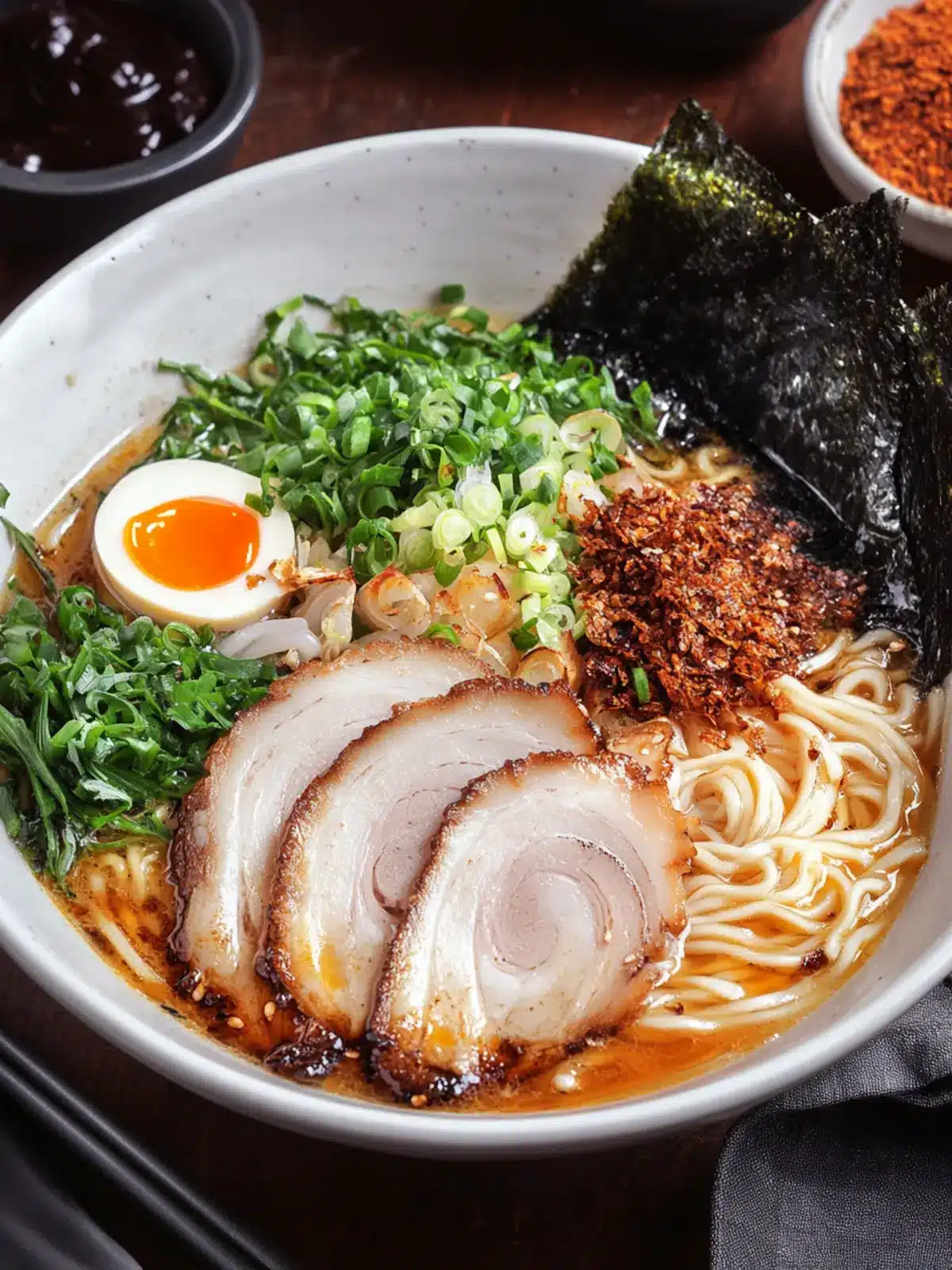
Expert Tips for Japanese Tonkotsu Ramen
Gentle Simmer: Ensure the broth simmers gently; vigorous boiling can break down the creaminess of your pork bone broth.
Egg Perfection: For marinated eggs, patience is key. Allow them to soak in the chashu liquid for at least 2-3 hours to enhance flavor.
Storage Secrets: Keep broth and noodles separate when storing leftovers; this helps maintain the perfect texture when reheating your Japanese Tonkotsu Ramen.
Skim the Foam: Regularly skim the broth while simmering to achieve a clear and luxurious finish.
Taste as You Go: Adjust seasoning throughout the cooking process; little tweaks can elevate your ramen to restaurant-quality greatness.
Japanese Tonkotsu Ramen Variations
Feel free to get creative with this recipe, as there are so many delightful alternatives at your fingertips!
Chicken Broth: Use a mix of chicken and pork bones for a lighter version that still has depth.
Vegan Option: Substitute pork bones with roasted vegetable scraps and mushrooms for a rich, umami-packed vegan broth.
Different Noodles: Experiment with egg noodles or even gluten-free noodles for a twist on the traditional texture.
Spicy Kick: Add chili paste or fresh slices of chili peppers in the broth for a fiery burst of heat.
Vegetable Boost: Include fresh vegetables like bok choy or spinach in the last few minutes of cooking for added nutrition and color.
Flavorful Oil: Drizzle sesame oil or chili oil over the finished ramen for an aromatic finish that adds depth.
Miso Twist: Stir in a spoonful of miso paste into the hot broth to introduce another layer of flavor.
Savory Toppings: Top with tempura vegetables or fried tofu for an extra crunch and unexpected texture contrast.
Each variation brings its unique charm, inviting you to discover new favorites!
Storage Tips for Japanese Tonkotsu Ramen
Fridge: Store the broth in an airtight container for up to 3 days. Keep noodles in a separate container to maintain their texture.
Freezer: Broth can be frozen for up to 3 months. Allow it to cool completely before transferring to freezer-safe bags, ensuring all air is removed.
Reheating: Gently warm the solidified broth on medium heat until steaming. For noodles, refresh them briefly in boiling water for 30 seconds before serving.
Serving Reminder: For the best taste and texture, assemble your Japanese Tonkotsu Ramen fresh before serving.
What to Serve with Japanese Tonkotsu Ramen?
When serving this delightful bowl of hearty happiness, consider sides and beverages that will elevate your dining experience.
Pickled Ginger:
A refreshing burst of zing that cuts through the richness of the broth and enhances every bite.Chili Oil:
Add a drizzle for a spicy kick that complements the savory depth of the Tonkotsu, engaging your taste buds in a dance of flavors.Japanese Gyoza:
These crispy dumplings filled with flavor make a perfect appetizer, providing a delightful crunch that contrasts with the ramen’s velvety texture.Steamed Edamame:
Lightly salted edamame pods offer a healthy, satisfying nibble that pairs wonderfully with the rich broth.Sake or Japanese Beer:
A chilled glass of sake or a light Japanese lager enhances your dining experience, bringing out the umami notes of the dish.Boba or Matcha Milk Tea:
For a fun twist, serve a refreshing boba or matcha milk tea as a beverage. Its creamy texture complements the ramen’s richness while offering a sweet finish.
Enjoy your Tonkotsu Ramen experience fully by bringing together these delightful additions!
Make Ahead Options
Preparing your Japanese Tonkotsu Ramen in advance is a fantastic way to save time during your busy week! You can make the rich pork bone broth and chashu pork up to 3 days ahead of time; just refrigerate them in airtight containers to maintain flavor and freshness. Soft boiled eggs can be cooked and marinated for up to 24 hours for optimal taste. When you re ready to serve, simply reheat the broth gently and cook the fresh ramen noodles according to package instructions. This method allows you to enjoy a comforting, restaurant-quality ramen in minutes without sacrificing on flavor, perfect for those welcoming a cozy weeknight dinner!
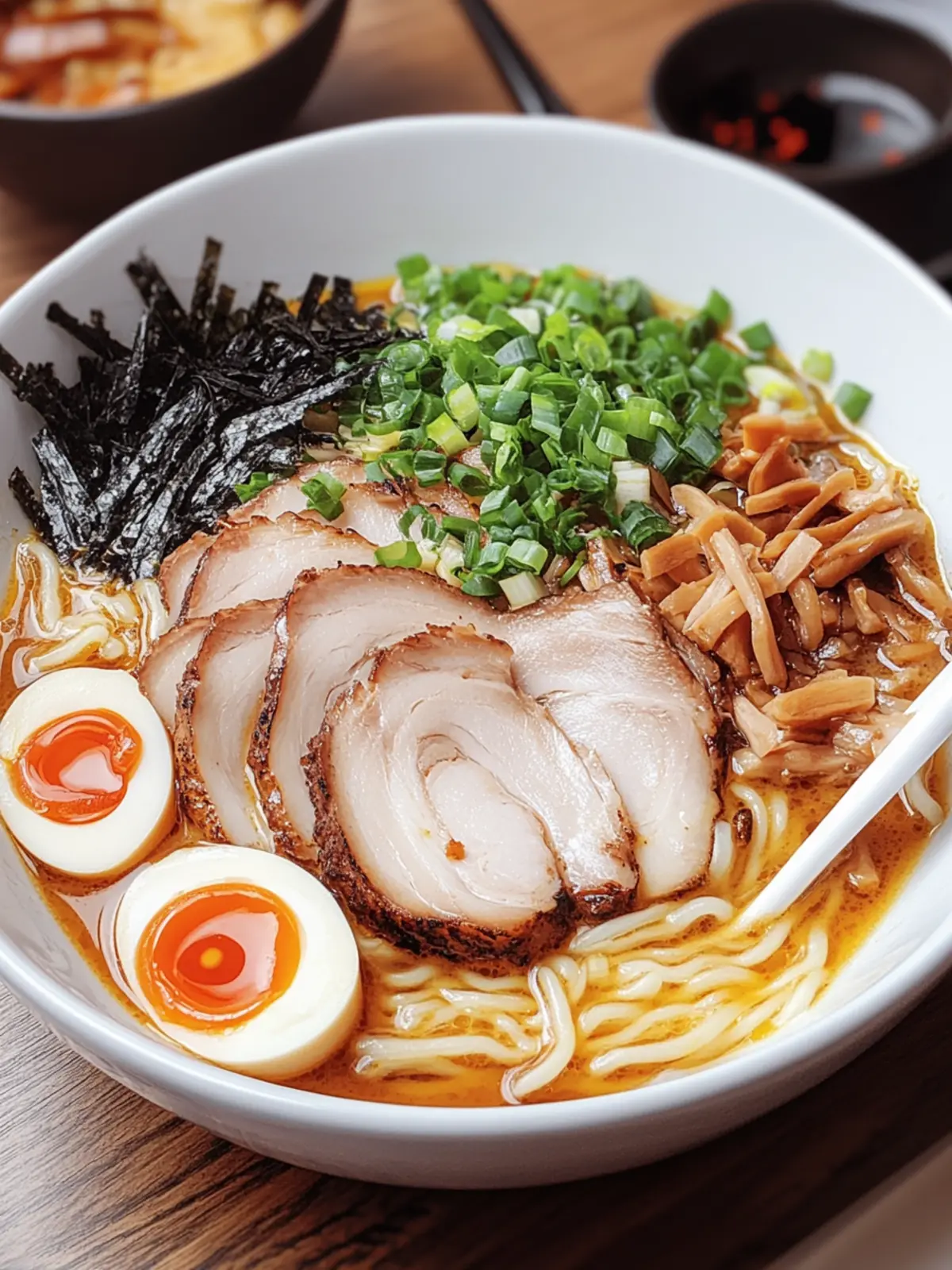
Japanese Tonkotsu Ramen Recipe FAQs
What type of pork bones should I use for the broth?
You should use neck and leg bones for the richest flavor. These bones contain a good amount of collagen, which contributes to that creamy mouthfeel essential in Tonkotsu broth.
How should I store leftover Tonkotsu Ramen?
Store the broth and noodles separately in airtight containers. The broth can last in the fridge for up to 3 days, while the noodles should ideally be consumed within 2 days to maintain their texture.
Can I freeze the broth? If so, how?
Absolutely! To freeze the broth, first allow it to cool completely. Then, transfer it into freezer-safe bags, making sure to remove as much air as possible. It can be kept in the freezer for up to 3 months. When ready to use, thaw overnight in the refrigerator and gently reheat on the stove.
What can I do if my broth is too greasy or cloudy?
If your broth turns out greasy, you can place it in the fridge overnight. The next day, any excess fat will solidify on the surface and can be easily skimmed off. To clarify a cloudy broth, keep skimming the foam during cooking for a clearer, more vibrant broth.
Are there any dietary considerations for this recipe, especially for allergies?
Yes! This recipe includes several common allergens, including soy sauce (wheat), mirin, and sake (may contain sulfites). If you’re preparing this for someone with gluten allergies, look for gluten-free soy sauce alternatives. Also, be cautious with toppings like soft-boiled eggs and pork belly if anyone has dietary restrictions.
How do I know when the broth is ready?
After simmering for 10-12 hours, the broth should be thick, milky, and aromatic, with clear depths of flavor. You ll know it’s ready when it has a creamy consistency that coats the back of a spoon and a satisfying umami flavor that makes your taste buds leap for joy.