
Savor the Comfort of Japanese Curry Recipe: Battleship Style
Last Updated on May 8, 2026 by juliarecipez
As the chilly days of autumn approach, I find myself reminiscing about comfort food that wraps me in warmth enter Japanese Battleship Curry. I first stumbled upon this delightful recipe during a lunch break, while browsing through culinary history, which instantly piqued my interest. This unique dish, a tribute to the navy’s culinary traditions, not only dazzles with rich flavors but also offers a cozy, hearty meal that effortlessly warms the soul.
Imagine tender beef simmered in a thick, savory sauce infused with rich curry and vibrant vegetables. Each spoonful brings a perfect balance of sweet and umami notes that dances on your palate. This recipe is not just about satisfying hunger; it s about creating joyful memories, whether shared with family on a quiet evening or impressing friends at a gathering.
What I adore most is how uncomplicated it is to whip up. You’ll have a delicious dinner ready in no time, proving that hearty meals don’t need endless hours in the kitchen. Join me in preparing this comforting masterpiece that promises to turn any day into a special occasion!
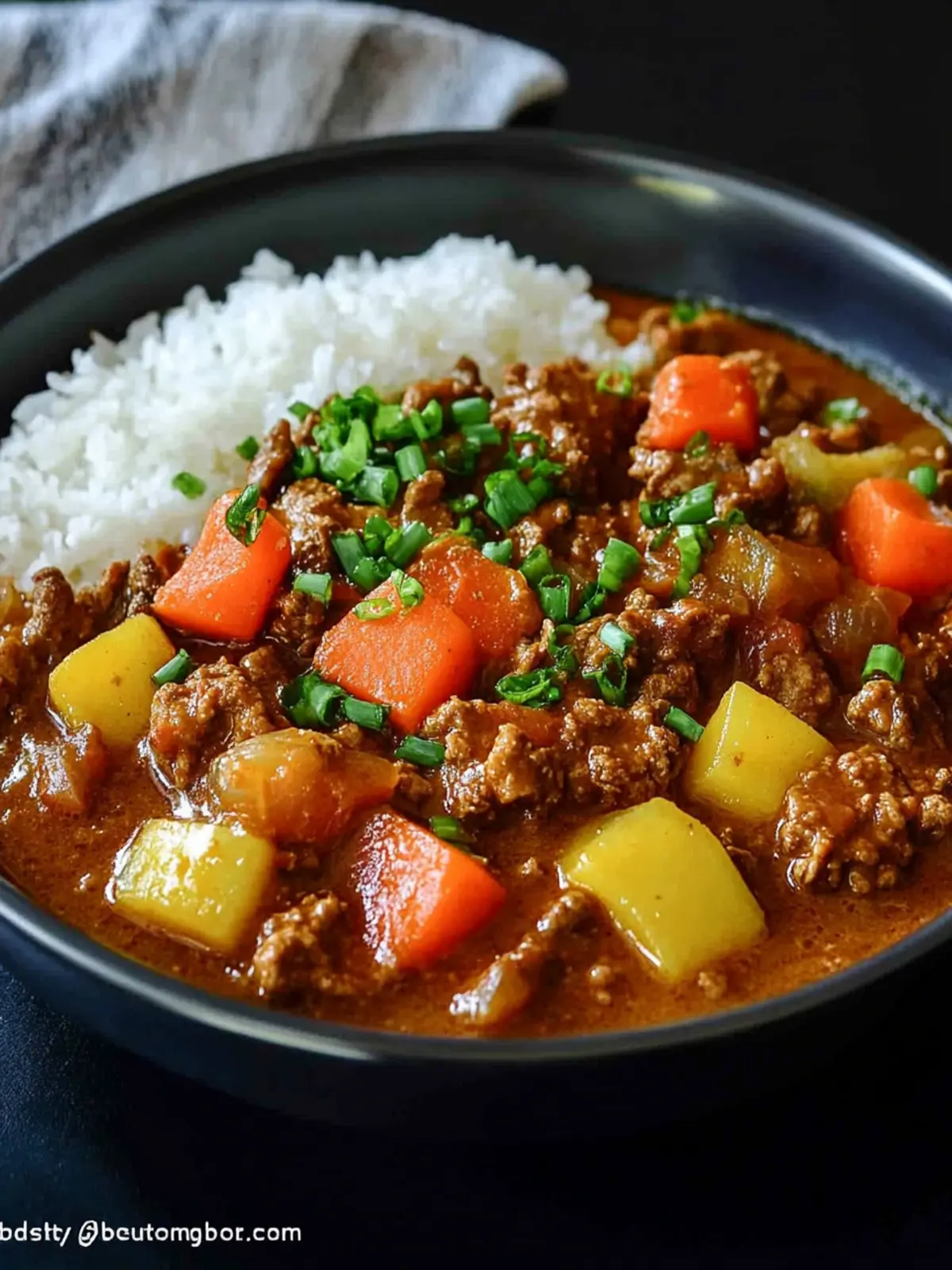
Why is Japanese Curry Recipe a must-try?
Simplicity at its Best: This Japanese Curry Recipe requires minimal effort, making it suitable for both novice cooks and seasoned chefs alike.
Rich, Flavorful Comfort: The blend of tender beef and aromatic vegetables creates a dish that warms your heart with every bite.
Historical Culinary Tradition: Rooted in naval history, this recipe offers a unique glimpse into Japan’s culinary evolution perfect for food lovers eager to explore culture through cuisine.
Versatile and Customizable: Feel free to swap out proteins or add extra veggies for a personal touch, ensuring everyone at the table is satisfied.
Quick and Satisfying: Whip it up in under an hour for a wholesome meal that doesn’t compromise on flavor, ideal for busy weeknights or cozy weekends.
Japanese Curry Recipe Ingredients
For the Curry Base
- Beef (2 lbs, thinly sliced) Provides the main protein; substitute with chicken or pork for variation.
- Knorr Beef Cube (1) Enhances flavor; you can use any beef broth or stock as an alternative.
- Water (3 cups) Serves as the cooking liquid; replace with beef broth to boost flavor.
- Cornstarch (1 tablespoon) Acts as a thickening agent; arrowroot or flour can be used instead.
For the Vegetables
- Potatoes (2, diced) Adds heartiness; sweet potatoes can be substituted for a sweeter touch.
- Carrots (2, diced) Contributes sweetness and texture; feel free to use parsnips for variety.
- Yellow Onions (2, chopped) Provides a base flavor; consider shallots for a milder taste.
- Garlic (3 cloves, sliced) Adds aromatic depth; garlic powder works, but use sparingly.
For Seasoning and Flavor
- Curry Powder (4 tablespoons) The main seasoning for the dish; adjust to taste for spiciness.
- Tomato Ketchup (3 tablespoons) Adds sweetness and tang; can be replaced with pureed tomatoes.
- Worcestershire Sauce (3 tablespoons) Deepens the flavor; soy sauce or liquid aminos are good substitutes.
- Honey (3 teaspoons) Balances flavors with its sweetness; maple syrup is a valid alternative.
- Coffee (½ cup) Introduces a hint of bitterness to balance flavors; instant coffee granules can also be used.
- Salt and Ground Black Pepper Essential for seasoning; adjust to taste.
For Finishing Touches
- Cooking Oil (2 tablespoons) Used for sautéing; any vegetable oil is acceptable.
- Butter (1 tablespoon) Adds richness; use olive oil or a dairy-free alternative if preferred.
- Grated Cheddar Cheese (¼ cup) Enhances creaminess; Parmesan can be a wonderful substitute, while nutritional yeast is great for a dairy-free option.
This Japanese Curry Recipe is not only a joy to make but also filled with flavors that will delight everyone around the table!
How to Make Japanese Curry Recipe
Season the Beef: Sprinkle the thinly sliced beef with salt and black pepper to enhance its flavor; give it a good toss and set it aside while you prepare the other ingredients.
Heat the Oil: In a large pot, warm the cooking oil over medium heat. Once hot, add the butter until it melts, creating a rich base for your curry.
Cook the Beef: Add the seasoned beef to the pot, stir-frying until it’s lightly browned, about 3-4 minutes. This step locks in the flavors before adding the vegetables.
Sauté Aromatics: Stir in the chopped onions and sliced garlic, cooking for about 1 minute. Enjoy the delicious aroma that fills your kitchen as they soften and become fragrant.
Add Carrots: Toss in the diced carrots and stir-fry for an additional 2 minutes. Their sweetness will blend beautifully with the rich flavors of the dish.
Simmer the Mixture: Pour in the water, bringing everything to a boil. This is where the magic begins, as the ingredients start to meld together.
Incorporate Flavors: Add the Knorr beef cube, curry powder, tomato ketchup, Worcestershire sauce, and honey. Cover the pot and let it simmer for 15 minutes, allowing the flavors to deepen.
Add Potatoes: Stir in the diced potatoes and let the curry simmer for another 12 minutes. The potatoes will soften and absorb the savory goodness around them.
Thicken the Curry: Mix the cornstarch with a little bit of water and then stir it into the pot. This will thicken your curry to a delightful consistency; let it bubble gently for a few minutes.
Finish with Cheese and Coffee: Fold in the grated cheddar cheese and brewed coffee, mixing well to incorporate. Adjust the seasoning with salt and pepper to taste, then serve hot on a platter, inviting everyone to dig in!
Optional: Garnish with fresh parsley for a pop of color.
Exact quantities are listed in the recipe card below.

Expert Tips for Japanese Curry Recipe
Slice Beef Thinly: Ensure the beef is sliced thinly for quicker cooking and tenderness. This avoids chewy pieces in your Japanese Curry Recipe.
Adjust Spice Levels: Curry powder varies in heat. Start with less and taste as you go to achieve the perfect spice level for your family’s preference.
Enhance Umami Flavor: Don t skip the coffee! It adds a unique bitterness that balances the sweetness, enhancing the overall flavor of your curry.
Vegetable Variations: Feel free to introduce seasonal vegetables like bell peppers or green beans, making your Japanese Curry Recipe even more nutritious and colorful.
Pairing Suggestions: Serve your curry over steamed rice or with crusty bread to soak up the rich sauce, creating a delightful dining experience.
Make Ahead Options
These Japanese Curry Recipe (Battleship Curry) components are perfect for meal prep! You can slice the beef, chop the vegetables, and mix your seasonings up to 24 hours in advance; simply refrigerate them in airtight containers to preserve freshness and prevent browning. The curry base can also be cooked entirely and stored in the fridge for up to 3 days. When you’re ready to serve, just reheat it gently on the stovetop and adjust any seasonings if necessary. This streamlined approach not only saves time but ensures your comforting curry is just as delicious as when made fresh. Enjoy quality family meals with minimal fuss!
Japanese Curry Recipe Variations
Feel free to add your twist to this glorious dish and make it your own!
- Protein Swap: Replace beef with chicken or tofu for a lighter take that still packs a flavorful punch.
- Sweet Potato: Use sweet potatoes instead of regular for a deliciously sweeter flavor that adds a nice contrast to the spiciness of the curry.
- Additional Veggies: Toss in bell peppers or green beans for an extra veg boost, making the curry even more nourishing and colorful.
- Cheese Alternatives: Experiment with cheeses like Gouda or mozzarella for a different creamy texture, or use nutritional yeast for a dairy-free option.
- Spicy Kick: Add red pepper flakes or fresh chopped chili for those who crave a little more heat; it will take your curry to a whole new exciting level!
- Herb Garnish: Fresh cilantro or green onions can brighten your dish right before serving, infusing fresh flavor and a pop of color.
- Curry Variations: Try different curry pastes, like yellow or red curry, to shift the overall flavor profile and experience new taste dimensions.
- Soy Sauce Boost: For a deeper umami flavor, drizzle some soy sauce into the pot before serving, enhancing the savory notes beautifully.
Now, unleash your creativity and enjoy the process of tailoring this dish to your taste!
What to Serve with Japanese Battleship Curry?
When savoring a warm bowl of rich curry, it’s delightful to consider what pairings will elevate your dining experience.
- Steamed Rice: Nothing captures the comforting essence of curry like a mound of fluffy, steamed rice that absorbs the sauce, enhancing every bite.
- Crusty Bread: The perfect companion for mopping up that delicious, thick sauce, crusty bread adds a beautiful texture to each meal.
- Pickled Vegetables: A tangy side like pickled radish offers a refreshing contrast, balancing the savory flavors of the curry while adding a vibrant crunch.
- Japanese Salad: A light salad with cucumber, seaweed, and sesame dressing enriches the meal with fresh, crisp elements that cleanse the palate.
- Green Tea: Serving a cup of warm green tea alongside adds a soothing note, complementing the dish while providing health benefits.
- Japanese Mochi: For dessert, sweet mochi offers a chewy finish, delivering a delightful taste of Japan that pairs well after the savory curry.
This combination turns your meal into a flavorful journey, where each aspect complements the next, creating a truly memorable dining experience.
How to Store and Freeze Japanese Curry Recipe
Fridge: Store leftovers in an airtight container for up to 3 days. Ensure it’s cooled to room temperature before sealing to maintain freshness.
Freezer: Place the curry in a freezer-safe container for up to 3 months. Leave some space at the top for expansion when freezing.
Reheating: To reheat, thaw overnight in the fridge, then warm on the stovetop over low heat, stirring occasionally, or use the microwave until heated through. Enjoy your flavorful Japanese Curry Recipe!
Meal Prepping: Consider portioning out the curry before freezing for easy, quick meals on busy days.

Japanese Curry Recipe (Battleship Version) Recipe FAQs
What type of beef should I use for Japanese Curry?
Absolutely! For this Japanese Curry Recipe, I recommend using thinly sliced beef, as it cooks quickly and remains tender. You can opt for cuts like sirloin or flank steak. If you prefer, chicken or pork can be delightful alternatives, giving you a chance to explore different flavors.
How should I store leftovers?
Very! To keep your Japanese Curry fresh, store any leftovers in an airtight container in the refrigerator. It will stay good for up to 3 days. Remember to let it cool to room temperature before sealing it up; this helps maintain its delicious flavors during storage.
Can I freeze Japanese curry, and if so, how?
Definitely! To freeze your Japanese Curry, place it in a freezer-safe container, leaving some room at the top for expansion. It can be stored for up to 3 months. When you’re ready to enjoy it, thaw overnight in the refrigerator, then reheat gently on the stovetop or in the microwave until heated through.
What should I do if my curry is too thick?
Don t worry; that s an easy fix! If your curry turns out too thick, simply add a bit more water or beef broth while reheating. Stir it well and let it simmer on low until it reaches your desired consistency. You can also adjust seasoning afterward to keep the flavors balanced.
Are there any dietary considerations with this recipe?
Absolutely! If anyone at your table has dietary restrictions, you can easily make this Japanese Curry Recipe gluten-free by using gluten-free Worcestershire sauce and ensuring your broth is gluten-free. For dairy-free options, substitute the cheddar cheese with nutritional yeast to maintain a cheesy flavor without the dairy. Always check for allergies, especially with aromatic ingredients!